Alkene Reactions: Ozonolysis using O3 and DMS
Reductive ozonolysis (O3 then dimethylsulfane, DMS) of alkenes
Ozone engages an alkene in a 1,3-dipolar cycloaddition, rearranges through the Criegee carbonyl oxide, and traps the fragments in a secondary ozonide. Dimethylsulfane (DMS) provides a closed-shell reductive workup that breaks the ozonide without over-oxidising the carbonyl fragments. The rule of thumb is straightforward: a vinylic carbon bearing a hydrogen becomes an aldehyde, a quaternary vinylic carbon stops at a ketone, and a terminal =CH2 fragment releases methanal. No carbocations are generated, so there are no rearrangements to memorise.
Quick Summary
- Reagents/conditions: O₃ (−78 → 0 °C in MeOH, CH₂Cl₂, or mixed solvents); reductive workup with dimethylsulfane (DMS) at ≤0 °C. Zn/AcOH or PPh₃ are common alternatives.
- Outcome: Vinylic hydrogens deliver aldehydes; fully substituted vinylic carbons deliver ketones; terminal =CH₂ fragments give methanal. No further oxidation occurs.
- Mechanistic spine: [3+2] cycloaddition → molozonide → Criegee carbonyl oxide + carbonyl → secondary ozonide → DMS cleavage to two carbonyl products.
- Closed-shell: No carbocations or rearrangements—electron flow is entirely polar.
- Contrast: Oxidative workup (O₃/H₂O₂) pushes aldehydes on to carboxylic acids; reductive workups stop at aldehydes/ketones.
Mechanism (8 Steps)
Class: Polar cycloaddition followed by peroxide cleavage.

The 1,3-dipolar addition forms two new C–O bonds in one step. The weak O–O bond and ring strain prime the intermediate for rearrangement.
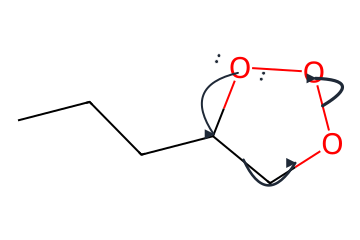
Lone pairs reorganise, cleaving the weak O–O bond. The zwitterionic carbonyl oxide sits adjacent to the freshly unveiled carbonyl fragment.

The carbonyl oxide adds into the carbonyl partner, delivering the familiar ozonide ring that stores the cleavage information.

The oxygen lone pair collapses back on the carbonyl carbon, sealing the 1,2,4-trioxolane ring and readying the ozonide for reductive cleavage.

DMS donates into an ozonide oxygen, weakening the adjacent O–O linkage. Subsequent steps cascade to the sulfonium/alkoxide pair and finally regenerate the carbonyl fragments.

The ozonide oxygen pushes electrons into the O–O bond while DMS accepts the positive charge, leaving a dimethylsulfonium attached to the former ozonide oxygen and an alkoxide poised for collapse.
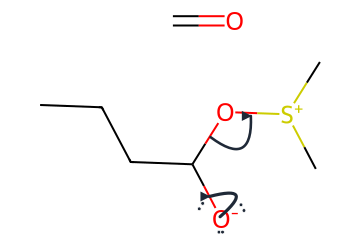
The alkoxide oxygen donates into the carbon to establish the carbonyl, while electrons shift toward the sulfonium oxygen, priming dimethylsulfoxide formation.
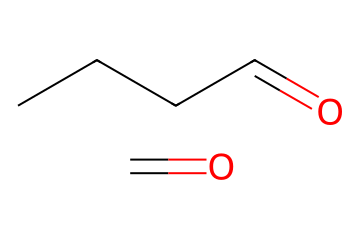
With the sulfonium fragment expelled, the two carbonyl products remain. The workflow redraws the aldehyde/ketone pair so the final frame matches a hand-drawn answer.
Mechanistic Checklist
- Ozone performs a [3+2] addition to make the molozonide (no radical initiation required).
- The molozonide re-equilibrates to a carbonyl oxide (Criegee) + carbonyl fragment.
- Recombination forms the secondary ozonide (1,2,4-trioxolane).
- DMS hits an ozonide oxygen, forming a dimethylsulfonium and breaking the weak O–O bond.
- Collapse of the sulfonium/alkoxide pair releases the two carbonyl fragments; DMS is oxidized to DMSO.
- No carbocations, rearrangements, or free radicals appear anywhere in the sequence.
Worked Examples
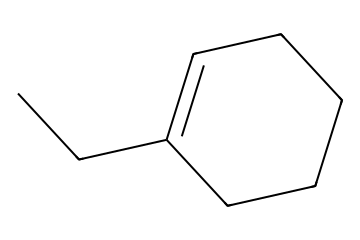

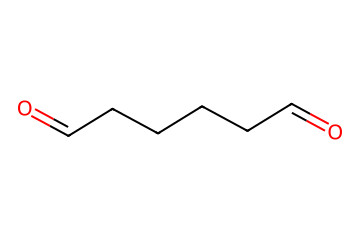
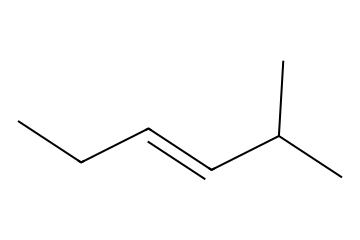
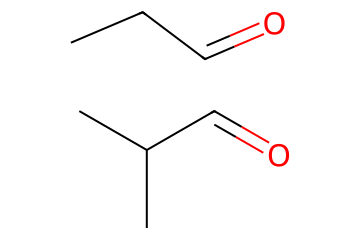
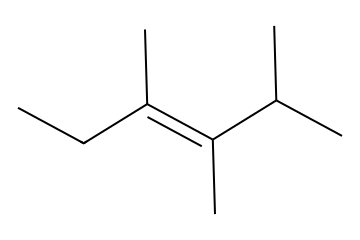
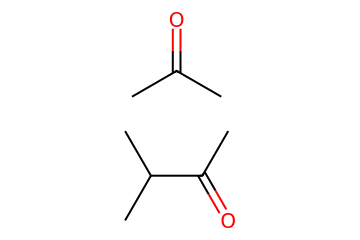
When Multiple Alkenes Are Present
- Ozone is highly reactive—site selectivity is limited. Expect cleavage at every accessible C=C if the reaction is run to completion.
- Cool temperatures, controlled ozone delivery, and stoichiometric limits can bias which double bond reacts first, but most syntheses assume global cleavage.
- Conjugated polyenes generate multiple carbonyl pairs; map each C=C independently and merge duplicate products.
- Cyclic systems open to give dialdehydes/diketones; plan for chain ends that may further react if the mixture is not quenched quickly.
Practical Tips & Pitfalls
- Safety — ozone: Use an O₃ generator with a destruct unit; chill the reaction and vent/destroy residual ozone before workup.
- Safety — DMS: Dimethylsulfane (dimethyl sulfide) is flammable with a strong odor. Expect oxidation to DMSO in the waste stream; contain vapors.
- Peroxide management: Quench ozonides completely (excess DMS, sulfite, or thiosulfate) before concentrating. Test for peroxides.
- Solvents: Methanol, dichloromethane, and biphasic MeOH/H₂O are common. Maintain −78 to 0 °C during O₃ addition; warm gently before the reductive workup.
- Contrast workups: Switching to O₃/H₂O₂ will oxidize aldehydes to acids—use the oxidative article for that variant.
Exam-Style Summary
Ozonolysis is a polar, closed-shell sequence: [3+2] addition → molozonide → Criegee pair → ozonide. A reductive DMS workup cleaves the ozonide without over-oxidation, delivering aldehydes wherever a vinylic H existed and ketones elsewhere. Terminal =CH₂ sites give methanal. No rearrangements, no radicals, no carbocations.
Interactive Toolbox
- Toggle reductive (DMS) vs oxidative (H₂O₂) ozonolysis in the Reaction Solver to compare aldehyde/ketone vs acid outcomes.
- Export the four-panel Criegee mechanism sequence from the Mechanism Solver for quick study decks.
- Use the solver’s product mode to confirm aldehyde vs ketone outcomes for substituted vs terminal alkenes.
FAQ / Exam Notes
- Why aldehyde vs ketone? Count vinylic hydrogens on each alkene carbon. A hydrogen survives as an aldehyde; none means a ketone.
- What happens to DMS? It is oxidized to dimethyl sulfoxide (DMSO) during the workup.
- Do stereocenters matter? Alkene geometry is lost at the cleavage stage; stereocenters on side chains remain untouched.
- Alternative reductants? Zn/AcOH or triphenylphosphane deliver the same aldehyde/ketone outcomes.
- Need oxidative products instead? See oxidative ozonolysis (O₃/H₂O₂).