Aldehyde → Carboxylic Acid with Silver (Ag₂O/H₂O)
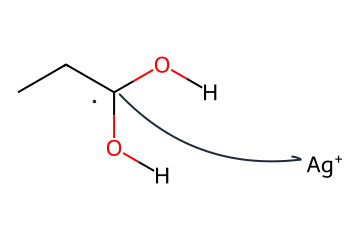
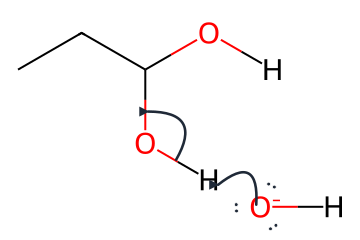
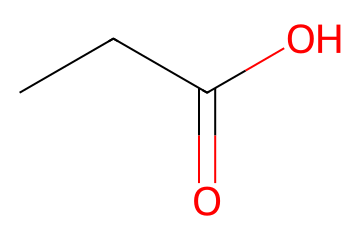
Silver(I) oxidants such as Ag₂O/H₂O or Tollens reagent convert aldehydes to carboxylates (or carboxylic acids after a quick acidification). In water the aldehyde hydrates to its gem-diol, which then delivers two electrons to Ag(I); silver is reduced to Ag(0) (the classic silver mirror) while the carbonyl carbon is oxidized to the carboxylate. This guide presents a single RDKit-backed mechanism and narrative that supports both neutral Ag₂O/H₂O and basic Tollens conditions via overlay swaps.
Quick Summary
- Reagents/conditions: Ag₂O/H₂O (neutral to mildly basic, 0–25 °C) or Tollens reagent ([Ag(NH₃)₂]⁺, basic); acidify Tollens mixtures during workup.
- Outcome: Aldehyde → carboxylate (basic medium) → carboxylic acid after H₃O⁺; neutral Ag₂O/H₂O can deliver the acid directly.
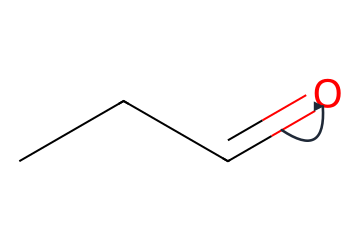
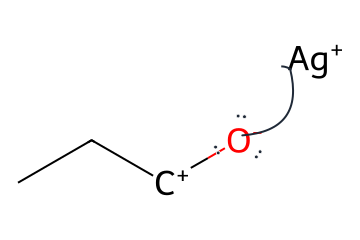
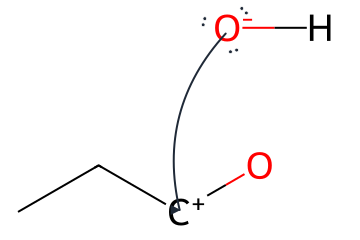
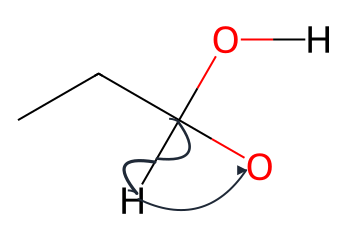
- Mechanistic spine: Hydrate the aldehyde → coordinate/deprotonate with Ag(I) → two-electron oxidation to carboxylate with Ag(I) → Ag(0) → protonate (optional) to the acid.
- Selectivity: Aldehydes react readily; simple ketones remain unoxidized (a hallmark of the Tollens test).
- Observation: Metallic silver deposits (mirror or black film) as Ag(I) is reduced to Ag(0).
Mechanism — Radical-Assisted Silver Oxidation (7 Steps)
Mechanistic Checklist (Exam Focus)
- Hydrate-first logic: oxidation proceeds from the gem-diol, not directly from the aldehyde.
- Track redox: aldehyde carbon is oxidized as Ag(I) is reduced to Ag(0) (mirror test).
- Medium controls the observed product: Tollens (basic) yields carboxylate until you add acid; neutral Ag₂O/H₂O can show the acid directly.
- Ketones are negative — a key diagnostic for Tollens-type reagents.
- Stoichiometry cue: each aldehyde typically reduces 2 Ag⁺ to 2 Ag(0).
Worked Examples
Propanal → Propanoic acid (Ag₂O/H₂O)


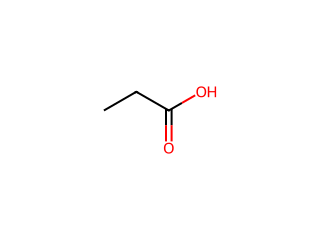
Neutral Ag₂O/H₂O oxidizes propanal smoothly to propanoic acid; the silver mirror reveals reduction to Ag(0).
Benzaldehyde → Benzoic acid (Tollens, then H₃O⁺)
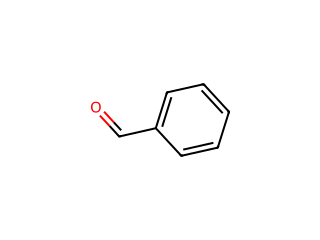
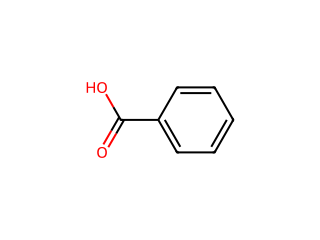
Tollens reagent (basic) first gives benzoate; a quick acidification furnishes benzoic acid after silver deposition.
Furfural → Furoic acid (Ag₂O/H₂O)

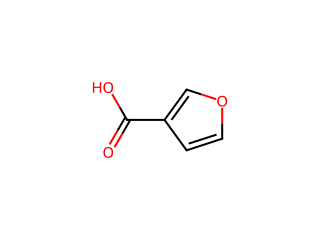
Heteroaryl aldehydes also oxidize efficiently; the furan ring survives while Ag(I) is reduced to Ag(0).
Scope & Limitations
- Great substrates: Aliphatic, benzylic, and heteroaryl aldehydes; formaldehyde reacts fastest (fully hydrated).
- Unreactive: Simple ketones are Tollens-negative; α-hydroxy aldehydes still oxidize.
- Medium effects: Tollens is basic — protect base-sensitive groups; Ag₂O/H₂O is milder but still aqueous.
- Silver salts: Halides can precipitate AgX and quench the oxidant; minimize competing ligands (thiols, phosphines).
Practical Tips
- Prepare Tollens reagent fresh; do not store dry residues (avoid shock-sensitive silver azides).
- Swirl reaction vessels to observe the silver mirror or black Ag(0) coating.
- Filter off metallic silver, rinse glassware thoroughly, and collect Ag waste for recovery.
- Acidify basic mixtures after oxidation to isolate the neutral carboxylic acid cleanly.
Exam-Style Summary
In water, aldehydes hydrate to gem-diols. Silver(I) accepts two electrons from the gem-diol, oxidizing the carbonyl carbon to a carboxylate while Ag(I) is reduced to metallic Ag(0) (silver mirror). Neutral Ag₂O/H₂O often shows the acid directly; Tollens reagent produces the carboxylate, which is protonated on workup. Ketones remain inert — a classic diagnostic.
Interactive Toolbox
- Mechanism Solver — Use Mechanism Solver to see each step of the silver oxidation mechanism along with descriptions of each step!
- Reaction Solver — Quickly find the product of any aldehyde reacted with Ag₂O/H₂O or Tollens reagent!
- IUPAC Namer — Learn the naming ins and outs of aldehyde starting materials and carboxylic acid products.
Related Reading
- Looking for a chromate-based oxidation instead? Read Aldehyde → Carboxylic Acid with Chromate (Cr(VI)) for the complementary Cr(VI) pathway.