Carbonyl Additions: Cyanohydrin Formation (HCN, NaCN/HCl, TMSCN)
Cyanohydrins (α-hydroxynitriles) form when cyanide adds to the carbonyl carbon of an aldehyde or ketone, producing a tetrahedral alkoxide that is subsequently protonated. Classic conditions generate hydrogen cyanide in situ from NaCN or KCN and a weak acid at a carefully buffered pH (~4.5–6). The transformation is reversible—aldehydes and activated ketones accumulate cyanohydrins readily, whereas simple dialkyl ketones often favour the starting carbonyl unless Le Châtelier tricks are applied.
Separate reagent buttons (HCN, NaCN, KCN) all call the same RDKit mechanism with pathway-specific overlays, so you can show whichever lab variant matches your worked example or homework set without duplicating infrastructure.
Safety first: Hydrogen cyanide is extremely toxic and volatile. Run the reaction in a fume hood with cyanide-specific PPE and waste protocols. (Some labs employ trimethylsilyl cyanide, TMSCN, with a Lewis acid to minimise free HCN exposure; that safer variant is not depicted here.)
Quick Summary
- Reagents/conditions: HCN generated in situ from NaCN or KCN plus a weak acid (pH ≈ 4.5–6, 0–25 °C); TMSCN/Lewis acid variants minimise free HCN but follow the same two-step logic.
- Outcome: Aldehydes furnish secondary cyanohydrins easily; ketones require activation (e.g., aryl or electron-withdrawing substituents) to favour product.
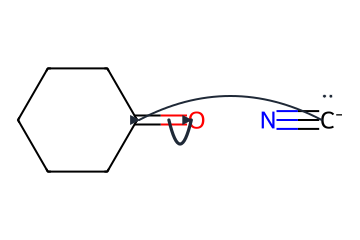
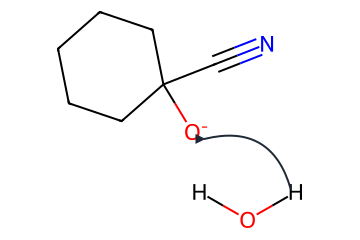
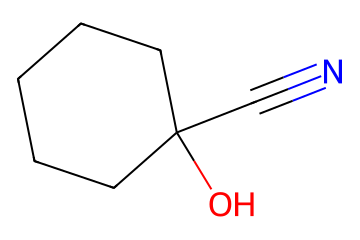
- Mechanism: CN⁻ nucleophilic addition → tetrahedral alkoxide → protonation to give R₂C(OH)CN, followed by an equilibrium reminder.
- Reversibility: Equilibrium-controlled; excess cyanide, product trapping (O–TMS), or reduced water content pushes formation forward.
- Stereochemistry: A new stereocentre appears at the cyanohydrin carbon—achiral setups deliver racemic mixtures unless asymmetric catalysts are used.
- Carbon selection: For unsymmetrical ketones, cyanide adds at the carbonyl carbon and protonation yields the hydroxyl on the more substituted side—double-check products honour that priority.
Mechanism (buffered HCN / NaCN / KCN)
Mechanistic Checklist (Exam Focus)
- Depict CN⁻ attack on the carbonyl carbon, formation of the tetrahedral alkoxide, and protonation to regenerate a neutral cyanohydrin.
- Flag the pH window (approximately 4.5–6) for HCN/NaCN runs: too acidic sequesters CN⁻, too basic prevents protonation and encourages decomposition.
- Note reversibility with double arrows; suggest how excess cyanide, O–TMS protection, or product removal pushes equilibrium toward cyanohydrin.
- Annotate the new stereocentre: racemic mixtures arise under achiral conditions; asymmetric catalysis is an advanced variant.
- Remind students that unsymmetrical ketones deliver the hydroxyl on the more substituted carbon—drawing the less substituted product is a common penalty.
- Mention alternative cyanide sources (e.g., TMSCN + Lewis acid) only as optional safer variants when relevant; the depicted mechanism uses buffered HCN.
Worked Examples
Benzaldehyde → mandelonitrile
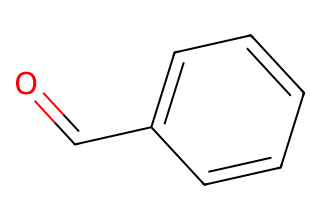
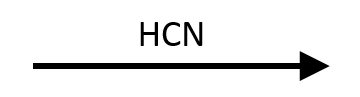
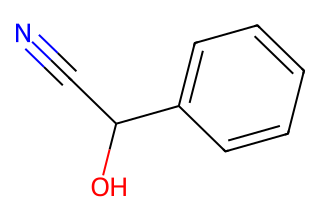
Buffered HCN readily delivers mandelonitrile. Aromatic conjugation stabilises the cyanohydrin and keeps equilibrium on the product side.
Acetone → acetone cyanohydrin
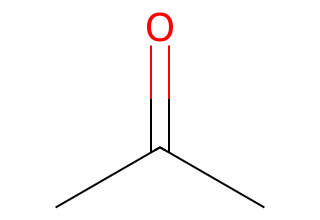
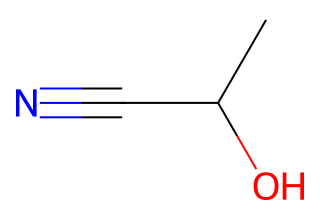
Dialkyl ketones are less favourable—hold the equilibrium with excess cyanide, low temperature, or consider product-trapping strategies.
Cyclohexanone → 1-cyanocyclohexanol
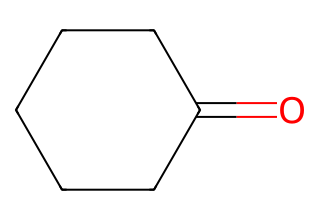

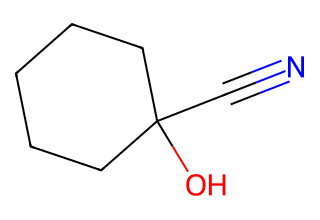
Cyclic ketones give racemic cyanohydrins; equilibrium can lag, so maintain pH and cyanide concentration to keep product from reverting.
Butanal → secondary cyanohydrin
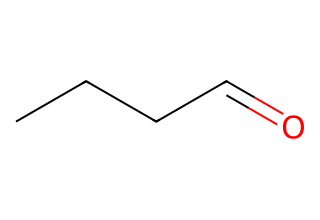

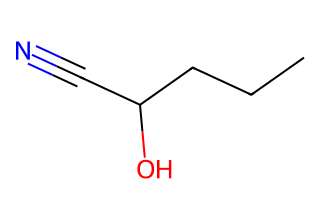
Aliphatic aldehydes react rapidly; work in a closed system and quench cyanide carefully because the cyanohydrin can revert during prolonged isolation.
Scope & Limitations
- Favoured substrates: Aldehydes (aliphatic or benzylic), aryl/activated ketones, α-halo/α-carbonyl systems that stabilise the developing anion.
- Sluggish cases: Hindered dialkyl ketones—equilibrium often lies toward the carbonyl unless additional driving forces (excess cyanide, low temperature, product trapping) are applied.
- Incompatible conditions: Strong mineral acids protonate cyanide completely; strong base promotes retro-cyanohydrin and decomposition.
- Safety & handling: Never generate HCN outside a hood; keep cyanide waste basic and oxidise under validated procedures. (TMSCN is a known safer alternative but not depicted here.)
- Downstream chemistry: Cyanohydrins are versatile—hydration/hydrolysis affords α-hydroxy acids or amides, while reduction gives β-amino alcohols. Protect or derivatise promptly if the equilibrium product is unstable.
Practical Tips & Pitfalls
- Control pH: Target 4.5–6 for HCN protocols—monitor with pH paper; adjust with weak acid/base to keep CN⁻ available yet protonation feasible.
- Drive equilibrium: Use a slight excess of cyanide, run at lower temperature, or remove/by capture the cyanohydrin as it forms.
- Check the product orientation: For unsymmetrical ketones, ensure the hydroxyl ends up on the more substituted carbon; incorrect orientation is a common exam error.
- Quench safely: Neutralise cyanide-containing mixtures with alkaline hypochlorite (or lab-approved treatment) before aqueous disposal.
- Storage: Many cyanohydrins are moisture sensitive and can revert. Store cold under inert atmosphere or convert to stable derivatives quickly.
Exam-Style Summary
Cyanide adds to the carbonyl carbon, forming a tetrahedral alkoxide that is protonated to give a cyanohydrin. The reaction is reversible, highly pH dependent, and generates a new stereocentre that is racemic under achiral conditions. Aldehydes and activated ketones give higher conversions than hindered dialkyl ketones. (TMSCN is a safer alternative in some labs, but the depicted mechanism focuses on buffered HCN.)
Related Reading
- Carbonyl → imine/enamine (RNH₂)
- Carbonyl → alcohol (NaBH₄, MeOH)
- Carbonyl → alcohol via Grignard (RMgBr)
Interactive Toolbox
- Mechanism Solver — Check out each individual mechanism step.
- Reaction Solver — Compare aldehydes vs ketones (HCN/NaCN/KCN presets share the same engine).
- IUPAC Namer — Confirm cyanohydrin nomenclature.