Corey–House (Gilman) Coupling — R₂CuLi with Alkyl Halides
Lithium diorganocuprates (Gilman reagents, R₂CuLi) couple with suitable alkyl halides (R′–X) to forge new C–C σ bonds (output: R–R′). In undergraduate synthesis, this is the go‑to way to join a primary, allylic, or benzylic sp³ electrophile with an aliphatic/aryl fragment carried by copper. Only one “R” transfers from R₂CuLi; the byproducts are formally written RCu and LiX. The most common teaching picture is: Cu(I) associates with R′–X → formal oxidative addition to Cu(III) → reductive elimination to deliver R–R′ with inversion at R′ (SN2‑like). Typical conditions: make R₂CuLi from RLi + CuI in dry Et₂O/THF (−78 → 0 °C), then add R′–X (X = I, Br; Cl is slower). Alkyl fluorides and tertiary halides fail.
Need a metal-carbon partner? Compare with acid chloride + Gilman (ketone) or Alkyl halide → Grignard formation when you need more basic nucleophiles.
Quick Summary
- Reagents/conditions: Prepare R₂CuLi (2 R–Li + CuI) in dry Et₂O/THF at −78 °C → 0 °C; add R′–X (iodides/bromides are common; chloride and tosylate reactivity depends on the reagent and solvent). Quench with NH₄Cl or dilute acid to remove copper salts.
- Electrophile scope: Primary (best), allylic, benzylic halides/sulfonates. Secondary electrophiles often give low coupling yields with dialkylcuprates and can undergo elimination; diarylcuprates can behave differently. Tertiary = no useful coupling. Alkyl fluorides are effectively inert.
- Outcome: R–R′ (only one “R” from the cuprate transfers). Byproducts: RCu and LiX.
- Stereochemistry: Stereospecific coupling can invert a stereogenic reacting carbon (SN2-like). Allylic partners may give SN2′ products (allylic transposition), depending on the substrate and reagent.
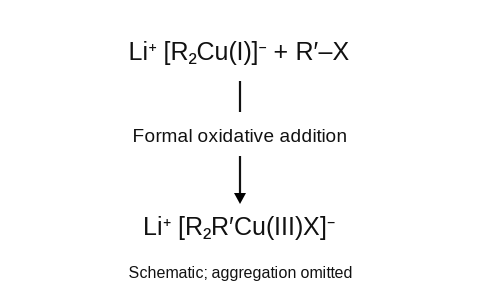
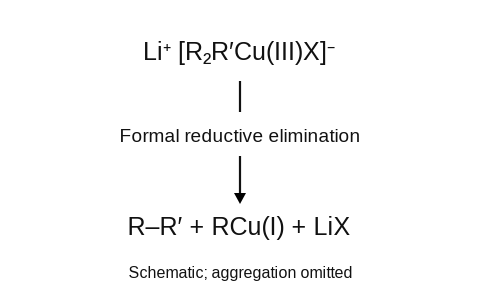
- Mechanistic teaching model: Cu(I) associates → formal Cu(III) oxidative addition → reductive elimination → RCu(I) + LiX + R–R′ (stoichiometric copper byproducts).
Mechanism — Formal Oxidative Addition → Reductive Elimination (2 Frames)
Teaching note: These two schematic frames show formal Cu(I) → Cu(III) → Cu(I) bookkeeping. Aggregation and detailed intermediates are omitted; this is a teaching model rather than a uniquely established elementary pathway. Copper is used stoichiometrically, with Cu(I) remaining in the byproducts.
Step 1 — Formal Oxidative Addition
Step 2 — Reductive Elimination (C–C Bond Formation)
Mechanistic Checklist
- Electrophile class: Primary (including benzylic/allylic) works best. Secondary electrophiles are often low-yielding with dialkylcuprates; some diarylcuprate couplings succeed. Tertiary fails under the standard conditions here.
- Leaving group: Iodides/bromides are common choices; chlorides and sulfonates can also work, with strong reagent/solvent effects. Alkyl fluorides are poor partners under these conditions.
- Only one transfer: Each R₂CuLi delivers a single “R”; the partner R remains as RCu byproduct.
- Stereochemistry: Expect inversion at a stereogenic reacting carbon when coupling is stereospecific. Allylic halides can give SN2′ products; unsubstituted allyl halides do not distinguish the pathways by product connectivity.
- Moisture/air sensitive: Make and use R₂CuLi in dry, inert ether at low temperature.
- Compare to Grignards: Cuprates are softer/less basic → reduced elimination and improved functional-group tolerance.
Worked Examples
Each card shows the stated electrophile and a product graph with the specific transferred group. The secondary example illustrates formal connectivity and stereochemistry, with its preparative limitation stated below. Automatic solver results for these exact pairs have not been verified.
MeI + n-Bu₂CuLi → Pentane
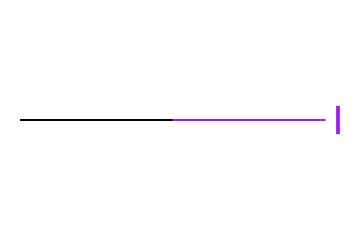
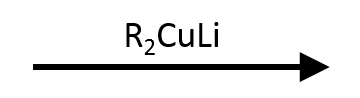
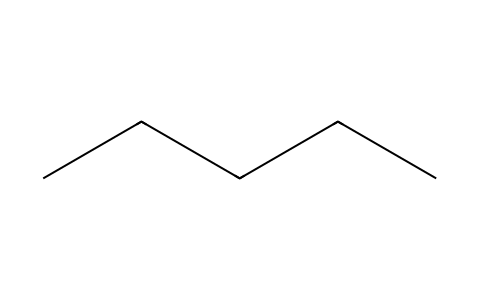
Methyl iodide undergoes a simple SN2-like coupling: one n-butyl fragment transfers while the second stays on copper (RCu byproduct).
Allyl bromide + (Ph)₂CuLi → Allylbenzene
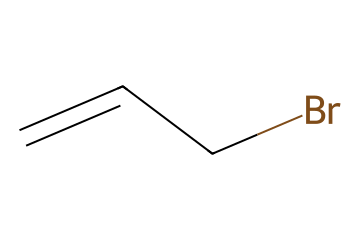
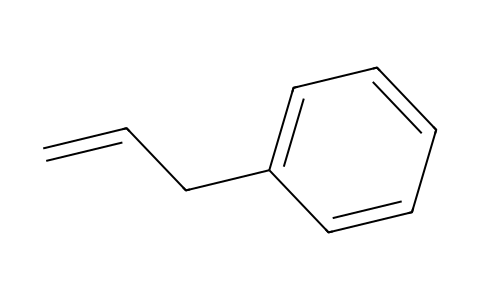
One phenyl group gives allylbenzene (Ph–CH₂–CH=CH₂). For unsubstituted allyl bromide, direct and SN2′ attack give the same constitutional product; this example cannot establish which pathway occurred.
(S)-2-bromobutane + (Cy)₂CuLi → formal (R)-sec-butylcyclohexane
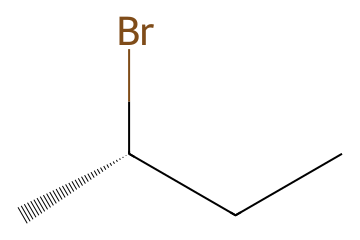
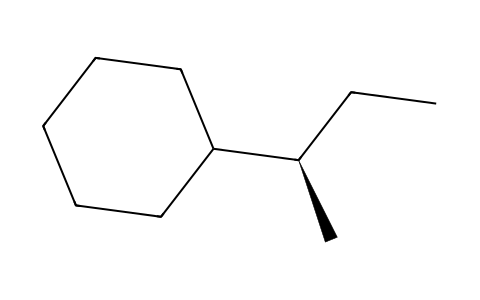
Cy denotes cyclohexyl. If this pair couples with inversion, the product graph is (R)-sec-butylcyclohexane, or [(2R)-butan-2-yl]cyclohexane. A secondary bromide with a dialkylcuprate is generally a poor coupling pair: low yield and competing elimination are concerns, and cooling alone does not guarantee success. The drawing illustrates stereochemical accounting, not a recommended clean preparation.
tert-Butyl bromide → No useful coupling (possible elimination)
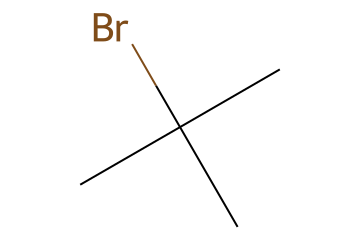
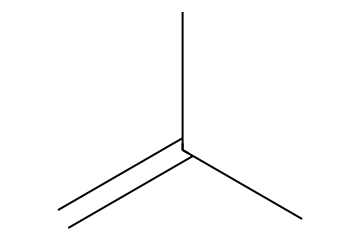
Tertiary halides are unsuitable for this coupling. Isobutene illustrates a possible elimination outcome; it is not a prediction of a single pure product under every set of conditions.
Scope & Limitations
- Works well: Primary alkyl iodides/bromides/chlorides; benzyl and allyl halides; tosylates/mesylates.
- Limited: Secondary halides with dialkylcuprates often give low yields or elimination; some diarylcuprates couple secondary partners successfully. Chlorides are slower but manageable.
- Fails under the standard conditions here: Tertiary alkyl halides and alkyl fluorides. Vinyl and aryl halides are outside this sp³-focused guide; organocuprates can couple with suitable examples under their own conditions, so they are not a universal failure class.
- Cuprate fragment R: Alkyl, aryl, and α-heteroatom stabilized chains are compatible. Consider R–Li availability.
Practical Tips & Pitfalls
- Make cuprate in situ: 2 R–Li + CuI at −78 °C, then add R′–X slowly.
- Exclude air/moisture: Organocuprates are air- and water-sensitive—use dry glassware, inert gas, cold temperatures.
- Order of addition: Often add the electrophile to the cuprate (not vice versa) to minimize R′–X decomposition.
- Plan stoichiometry: One equivalent of R₂CuLi transfers one R fragment.
- Use the right leaving group: Iodides/bromides or sulfonates; avoid fluorides unless a different coupling (e.g., Pd) is specified.
- Highlight byproducts: Mention RCu and LiX in mechanism frames or exam answers.
Exam-Style Summary
Corey–House: 2 R–Li + CuI → R₂CuLi + LiI; R₂CuLi + R′–X → R–R′ (best with primary/allylic/benzylic halides; X = I/Br/Cl). Only one R transfers. Mechanistic shorthand: Cu(I) → Cu(III) oxidative addition, then reductive elimination (net SN2/inversion at R′). Secondary/dialkylcuprate pairs often give low yields or elimination; diarylcuprates can differ. Tertiary/alkyl fluorides = no useful coupling under these standard conditions.
Interactive Toolbox
- Mechanism Solver Open mechanism practice; no preset or route toggle is verified for this guide.
- Reaction Solver Open reaction practice; automatic results for these worked examples have not been verified.
- IUPAC Namer — Confirm product names like pentane, allylbenzene, or sec-butylcyclohexane.
The worked examples above are static teaching examples; these generic tool links do not prefill or guarantee their results.