Aromatic Reactions: Friedel–Crafts Acylation (RCOCl/(RCO)₂O, AlX₃)
Friedel–Crafts acylation installs an acyl group (–COR) onto benzene and substituted arenes via electrophilic aromatic substitution (EAS). A Lewis acid such as AlCl₃ (AlBr₃ behaves similarly) activates an acyl chloride (RCOCl) or acid anhydride ((RCO)₂O) to generate the acylium ion (R–C≡O⁺ ↔ R–C⁺=O). The arene attacks this electrophile, forming a σ-complex that rearomatizes after deprotonation; aqueous workup breaks the Ar–COR·AlX₃ complex to release the aryl ketone. Because –COR is deactivating and meta-directing, the reaction typically stops at mono-acylation. This reliability makes acylation followed by carbonyl reduction the go-to workaround for the rearrangement pitfalls of Friedel–Crafts alkylation.
Key Emphasis (Teaching Pivots)
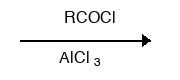
- Electrophile identity: Acylium ion (R–C≡O⁺ ↔ R–C⁺=O) generated from RCOCl or (RCO)₂O plus AlCl₃/AlBr₃. Always show this activation before the arene attack.
- Canonical EAS pattern: π-attack → σ-complex (Wheland) → deprotonation → aromaticity restored. The product initially remains complexed to the Lewis acid until aqueous workup.
- No rearrangements: The acylium is resonance-stabilized, so the carbon skeleton stays intact—unlike Friedel–Crafts alkylation.
- Mono-acylation default: –COR is deactivating/meta-directing, so additional acylations are disfavored.
- Acylation–reduction hack: Install –COR, then reduce (Clemmensen or Wolff–Kishner) to obtain un-rearranged alkylbenzenes.
Quick Summary
- Reagents/conditions: RCOCl or (RCO)₂O with AlCl₃/AlBr₃ in dry CH₂Cl₂, CS₂, or CCl₄ (0–25 °C for activated rings; warmer for sluggish ones).
- Electrophile: Acylium ion (R–C≡O⁺) generated by coordination and halide/acetate departure.
- Outcome: Ar–H → Ar–COR; product carbonyl is deactivating and meta-directing, so mono-acylation dominates.
- Selectivity: Ortho/para directors lead to o/p acylation (para favored when sterics block ortho); meta directors yield meta if the substrate is reactive enough.
- Limitations: Strong EDG (–NH₂, –OH) must be protected (acetanilide, silyl ether); strong EWGs (–NO₂, –CF₃, –SO₃H) prevent acylation.
- Strategic use: Combine with reduction (Clemmensen, Wolff–Kishner) to build alkylbenzenes without rearrangements.
Mechanism — Friedel–Crafts Acylation (5 Frames; arrows A–F)
Each frame below uses benzene and acetyl chloride as the reference substrate.
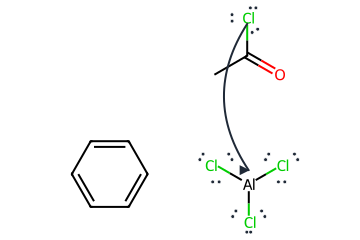
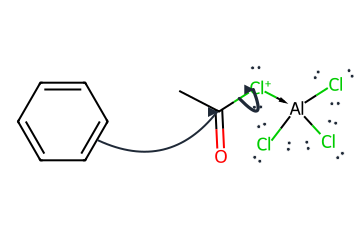
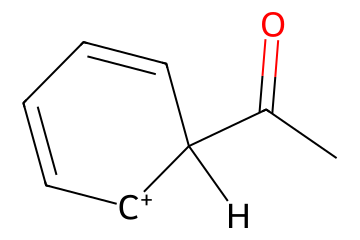
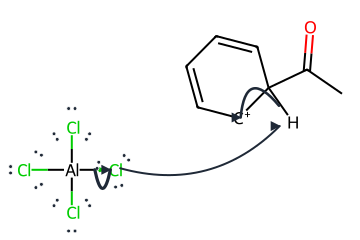
Orientation is handled by the global EDG/EWG map: activators (alkyl, alkoxy, amide) → ortho/para (para favored when sterically open); deactivators (carbonyls, –NO₂, –CF₃) push toward meta. The newly installed –COR behaves as a strong meta director for any subsequent EAS.
Mechanistic Checklist (Exam Focus)
- Always show acylium formation first; the electrophile is R–C≡O⁺, not an acyl chloride attacking directly.
- The σ-complex formation (π attack) is rate-determining; depict the Wheland intermediate with the benzylic H explicit.
- No carbocation rearrangements occur—acylium ions are resonance-stabilized.
- Product –COR groups deactivate and direct meta, so a single acylation is typical.
- Strong donors (–NH₂, –OH) bind or protonate; protect them (acetanilide, silyl ethers) or expect failure.
- Acid anhydrides mimic acyl chlorides mechanistically while avoiding HCl generation.
Worked Examples
Seafoam-teal highlights mark the R group in the acyl chloride reagent and the corresponding acyl fragment in the product.
Reactant
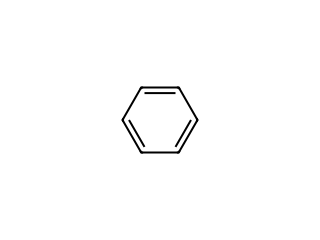
Benzene (unsubstituted arene)
Reagent
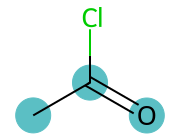
CH₃COCl (seafoam-teal = CH₃ nucleophile)
Product
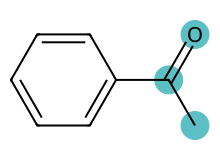
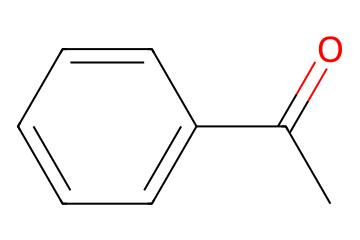
Acetophenone (seafoam-teal = installed acyl)
Reactant
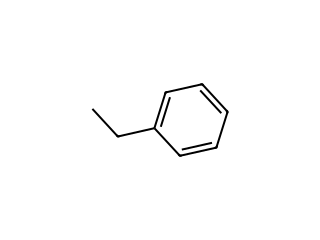
Toluene (methyl o/p director)
Reagent
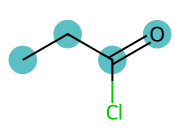
CH₃CH₂COCl (seafoam-teal = CH₂CH₃)
Product
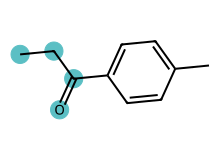
p-Propiophenone (seafoam-teal = propionyl)
Reactant
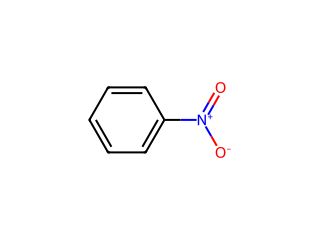
Nitrobenzene (strongly deactivated)
Reagent
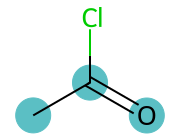
CH₃COCl (seafoam-teal = CH₃)
Product
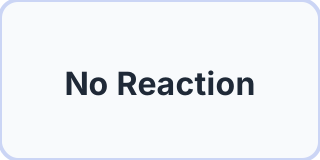
No reaction
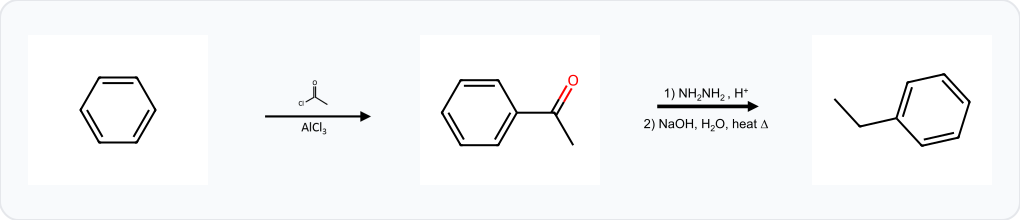
Acylate first, then reduce the carbonyl (Clemmensen or Wolff–Kishner) to obtain un-rearranged alkylbenzenes—a common workaround for rearrangement-prone alkylations.
Scope & Limitations
- Works well: Benzene, alkylbenzenes, mildly activated rings. Anhydrides can be gentler for sensitive substrates.
- Challenging: Strong EDG (–OH, –NH₂) unless protected; strong EWGs (–NO₂, –CF₃, –SO₃H) often halt the reaction.
- Reagent choice: Acyl chlorides are common; symmetrical anhydrides avoid HCl formation.
- Selectivity: Para favored over ortho with bulky o/p directors. Meta outcomes occur only when set by existing meta directors.
- Formylation caveat: HCOCl is unstable—use Gattermann–Koch or Vilsmeier–Haack for formylation.
Practical Tips
- Keep everything dry—AlCl₃/AlBr₃ hydrolyze instantly.
- Add the acyl chloride slowly to cooled arene + AlCl₃ to control the exotherm.
- Expect a persistent Ar–COR·AlCl₃ complex; quench with ice then acid to release the ketone.
- For sluggish rings, switch to acid anhydrides or increase temperature, but monitor for Lewis-acid damage to protecting groups.
- Plan protection for amines/phenols (e.g., acetanilide) before attempting ring acylation.
Exam-Style Summary
RCOCl or (RCO)₂O with AlCl₃/AlBr₃ generates an acylium electrophile. Benzene attacks to give the σ-complex, AlX₄⁻ removes the proton to restore aromaticity, and aqueous workup liberates Ar–COR. The product carbonyl deactivates and directs meta, so mono-acylation predominates. No carbocation rearrangements occur; use acylation followed by reduction to build un-rearranged alkylbenzenes.
Interactive Toolbox
- Mechanism Solver — Animate acylium formation → σ-complex → deprotonation → workup while toggling acyl source (RCOCl vs anhydride) and Lewis acid (AlCl₃/AlBr₃).
- Reaction Solver — Predict ortho/meta/para outcomes for substituted arenes under Friedel–Crafts acylation and flag incompatibilities (e.g., unprotected –NH₂/–OH, strongly deactivated rings).
- IUPAC Namer — Practice naming aryl ketone products such as acetophenone, p-propiophenone, and cyclic acylation products.