Ester Reactions: Ester → Amide using Excess NH₃
Aminolysis of esters with excess ammonia converts R–COOR′ into the primary amide R–CONH₂ through nucleophilic acyl substitution. NH₃ adds to the carbonyl, generating a tetrahedral intermediate. The simplified frames below show collapse expelling RO⁻, followed by proton transfer from the N-protonated amide to give neutral amide and ROH; proton transfers may also precede or accompany collapse. Ordinary amide formation is generally favorable but can be slow, so laboratory procedures commonly use excess NH₃ and heating. Removing ROH can improve conversion when practical.
Key Points
- Mechanistic spine: Closed-shell nucleophilic acyl substitution — NH₃ addition → tetrahedral intermediate → proton shuttles → collapse to amide + ROH.
- Conversion control: Use a large excess of NH₃ to increase reaction rate and conversion; heat/pressure may be needed for unactivated esters. ROH removal can help when practical. A favorable overall transformation can still be kinetically slow.
- Proton-transfer logic: Alkoxide can accept a proton as the amine-derived nitrogen becomes neutral, giving ROH and amide. Free NH₄⁺/alkylammonium pKₐ values provide acid–base context, but are not the pKₐ of the acylated intermediate.
- Scope choice: Primary/secondary amines also aminolyze esters to N-substituted amides; rates depend on nucleophilicity and steric hindrance. This article focuses on NH₃ → primary amides.
Quick Summary
- Reagents/conditions: Excess NH₃ (NH₃(l), NH₃ in MeOH/EtOH, or concentrated NH₄OH); heat/pressure as needed; neutral to mildly basic media.
- Outcome: R–C(=O)OR′ + NH₃ ⇌ R–C(=O)NH₂ + R′OH.
- Driving forces: Le Châtelier (excess NH₃, removal of ROH) + amide resonance stabilization.
- Avoid: Strong acid (protonates NH₃ to NH₄⁺) and oxidants that would quench NH₃.
Mechanism — Aminolysis by NH₃ (4 Steps)


Mechanistic Checklist (Exam Focus)
- NH₃ adds to the carbonyl — draw the tetrahedral intermediate explicitly.
- Proton transfers give ROH and neutral –NH₂ in the final products; their timing can vary with conditions.
- The depicted collapse expels RO⁻, which is then protonated. Another consistent depiction can protonate the leaving group before collapse. Show closed-shell arrows only.
- Excess NH₃ promotes rate and conversion; ROH removal can help. Do not confuse a slow reaction with an unfavorable equilibrium.
- Product is the primary amide (from NH₃); amide is much less reactive, so over-acylation is not observed.
Worked Examples
Methyl benzoate → benzamide + methanol
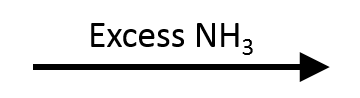
NH₃ (excess, MeOH, sealed tube) aminolyzes methyl benzoate to benzamide; methanol is the leaving-group alcohol.


Ethyl acetate → acetamide + ethanol
Excess NH₃ in EtOH converts ethyl acetate to acetamide; heating in a pressure-rated vessel may be used when needed. NH₃ excess promotes rate and conversion.


γ-Butyrolactone → 4-hydroxybutanamide
Ring opening gives 4-hydroxybutanamide, HO–CH₂–CH₂–CH₂–CONH₂, retaining all four carbons. Further heating/dehydration can convert this hydroxy amide into 2-pyrrolidone.


Scope & Limitations
- General esters: Alkyl esters react, often requiring heat or concentrated NH₃. Esters with aryloxy leaving groups (RCOOAr), especially activated p-nitrophenyl/pentafluorophenyl groups, are more reactive; these differ from aromatic acyl esters (ArCOOR′). Steric hindrance can slow aminolysis.
- Lactones: Open to hydroxy amides (useful for polymer chemistry).
- Competing processes: In alcoholic solvents, transesterification may compete; aqueous NH₃ can also permit ester hydrolysis. Use sufficiently concentrated NH₃ and conditions appropriate for the substrate.
- Acidic media: Protonates NH₃ → NH₄⁺ (non-nucleophilic) and halts aminolysis.
pKₐ Notes (Context)
- pKₐ(NH₄⁺) ≈ 9.2; simple alkylammonium ions pKₐ ≈ 10–11.
- pKₐ(H₂O) = 15.7; pKₐ(ROH) ≈ 16–18. → These free-ion values explain why RO⁻ can deprotonate NH₄⁺ or simple alkylammonium ions. The nitrogen in mechanism frame 3 is an N-protonated amide, whose acidity differs from NH₄⁺; do not assign it pKₐ 9.2. Basicity alone also does not determine an amine’s aminolysis rate. Exclusion of RNH₂/R₂NH here is a scope choice.
Edge Cases & Exam Traps
- Using insufficient NH₃ activity or reaction time can limit conversion; lack of ROH removal does not by itself guarantee failure.
- Treating RO⁻ departure as impossible: the pictured pathway expels alkoxide and then protonates it; label the proton-transfer order consistently.
- Confusing with acid chloride aminolysis (unactivated esters are less reactive and often need more time, heat or concentrated NH₃).
- Claiming “over-acylation” — amides are far less reactive than esters, so the reaction stops at the amide.
Practical Tips
- Use NH₃ in large excess (NH₃(l) or concentrated solutions). Seal tubes/autoclaves when heating volatile NH₃ mixtures.
- Remove ROH (distillation, extraction) to pull the equilibrium toward the amide.
- Activated esters can lower the temperature or time needed for aminolysis; steric hindrance can still slow the reaction.
- Avoid strong acid; protonation reduces the concentration of nucleophilic NH₃. The extent depends on the acid and solution conditions.
Exam-Style Summary
Ester + excess NH₃ → tetrahedral addition → collapse/proton transfer → RCONH₂ + ROH. The frames show RO⁻ departure followed by N-deprotonation; other proton-transfer orders are possible. Excess NH₃ promotes conversion, and ordinary amide formation is generally favorable despite sometimes slow kinetics. Free-ammonium pKₐ values are context, not the acidity of an N-protonated amide.