Nitrile Reactions: Nitrile to Aldehyde with DIBAL-H
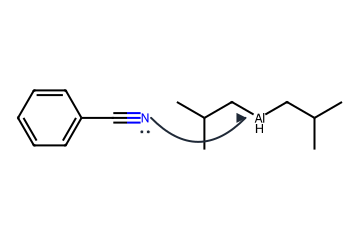
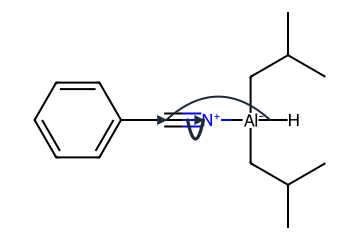
Diisobutylaluminum hydride (DIBAL-H, DIBAH, i-Bu2AlH) converts nitriles (R-CN) into aldehydes when the reaction is run cold (typically -78 C in toluene, hexanes, or THF), the hydride charge is limited to ~1 equiv, and a careful aqueous workup is performed. DIBAL-H acts as both a Lewis acid and hydride donor: Al coordinates the nitrile nitrogen, a single hydride transfers to the nitrile carbon forming an imine-aluminum complex, and aqueous workup hydrolyzes this imine to release the aldehyde plus ammonia (or an ammonium salt). If the mixture warms or excess hydride remains, a second hydride reduces the imine to a primary amine.
Key Emphasis (Teaching Pivots)
- Temperature + equivalents control selectivity. Nitriles stop at aldehydes with ~1.0-1.2 equiv DIBAL-H at -78 C plus a cold aqueous quench. Warming toward 0 C or using >1.5 equiv drives over-reduction to primary amines.
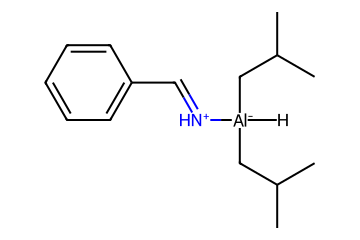
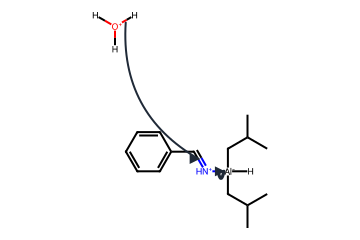
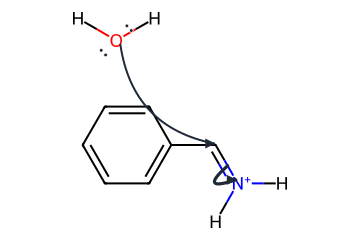
- Imine intermediate is key. Al-N coordination activates the nitrile; one hydride generates an imine-Al complex that remains "frozen" at -78 C. Aqueous acid (H3O+) hydrolyzes the imine through an iminium intermediate to the aldehyde.
- Compare to LiAlH4. LAH reduces nitriles all the way to primary amines (2 hydrides). DIBAL-H at low temperature stops at the imine/aldehyde stage.
Quick Summary
- Reagents/conditions: DIBAL-H (1.0-1.2 equiv), toluene/hexanes/THF, -78 C; slow addition to the cold nitrile solution; quench at -78 C with MeOH, then dilute aqueous acid (H3O+) or NH4Cl.
- Outcome: R-CN + H3O+ workup -> R-CHO + NH4+. The nitrile loses nitrogen as ammonia/ammonium.
- Over-reduction risk: >1.5-2 equiv DIBAL-H, letting the mixture warm before quench, or using excess LiAlH4 converts the imine all the way to the primary amine.
- Comparison: LiAlH4 reduces nitriles directly to amines (2 H transfers); DIBAL-H at -78 C can be "frozen" at the imine stage, which hydrolyzes to aldehyde.
Mechanism - Imine Formation and Hydrolysis
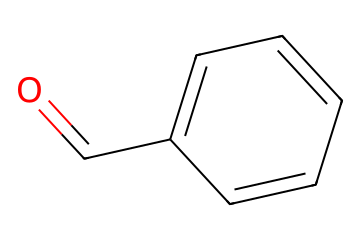
Mechanistic Checklist (Exam Focus)
- Show Al-N coordination followed by a single Al-H hydride arrow to the nitrile carbon.
- Name/depict the imine-Al complex intermediate - students should recognize it as the "frozen" species at -78 C.
- Track the nitrogen fate: the imine hydrolyzes to release NH3/NH4+ during aqueous workup.
- Include the over-reduction trap: warm temperatures or excess hydride reduce the imine further to the primary amine.
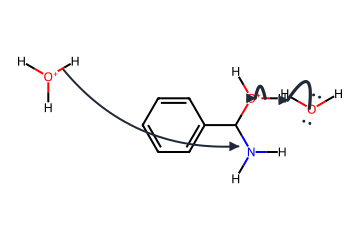
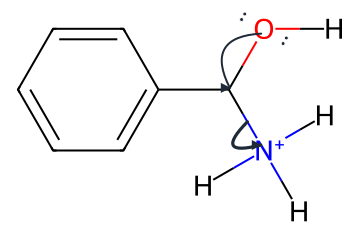
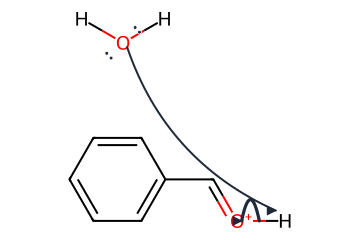
- Imine hydrolysis follows the standard mechanism: protonate N -> water attacks C -> proton shuttle -> eliminate NH3 -> deprotonate oxonium.
Worked Examples
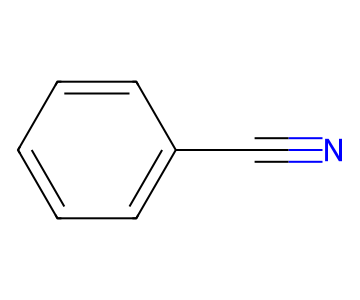
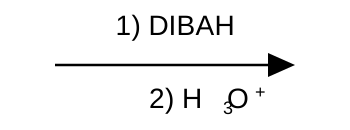
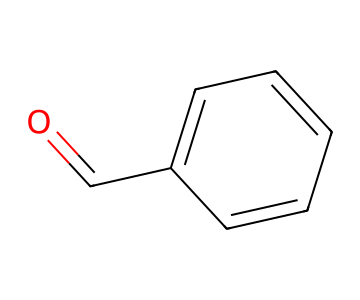
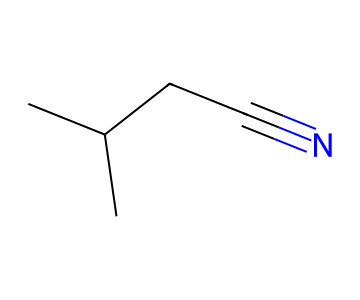
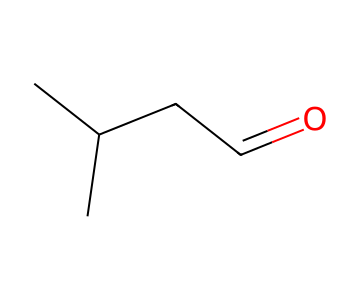
Scope & Limitations
- Works best: Aliphatic and aryl nitriles. Benzonitrile and simple alkyl nitriles convert cleanly to aldehydes.
- Functional groups tolerated (pre-quench): Al-H reagents demand strictly aprotic, oxygen-free setups. Protect alcohols/phenols if they would react with DIBAL-H. Esters can be reduced by DIBAL-H (different product - see ester guides).
- Temperature: Keep <= -60 C until after the aqueous quench to avoid runaway hydride transfer to the imine.
- Over-reduction: >1.5 equiv hydride, warming before quench, or using LiAlH4 gives primary amines.
Edge Cases & Exam Traps
- Warm quench: Letting the mixture warm toward 0 C before quenching allows the second hydride to reduce the imine to the amine.
- Excess reagent: Stock DIBAL-H solutions are often >1.0 M; miscalculations lead to >1.5 equiv and over-reduction to amines.
- LiAlH4 confusion: LAH always reduces nitriles to amines (2 hydride additions). DIBAL-H at -78 C is special because it can stop at 1 hydride.
- Protic solvent before quench: EtOH, MeOH, or water prior to the planned quench destroys Al-H and derails the reaction.
Practical Tips
- Calibrate the reagent. Verify the actual concentration of the DIBAL-H solution and charge only 1.0-1.2 equiv for aldehyde stops.
- Add to cold substrate. Cool the nitrile solution to -78 C first, then add DIBAL-H slowly while monitoring.
- Aqueous acidic workup. Unlike esters (which can use neutral conditions), nitrile reductions require acidic conditions (dilute HCl or H3O+) to hydrolyze the imine intermediate to the aldehyde.
- Workup: Filter off Al salts (Celite) before concentration to minimize side reactions.
- Safety: DIBAL-H is pyrophoric; work behind a blast shield, maintain positive N2 flow, and vent carefully during quench.
Exam-Style Summary
Nitrile + DIBAL-H (~1.0 equiv, -78 C) -> imine-Al complex (frozen) -> H3O+ workup -> aldehyde + NH4+. Excess hydride or warming delivers the primary amine. The imine hydrolysis follows standard carbonyl-forming elimination from a hemiaminal.
Interactive Toolbox
- Mechanism Solver - Enter any nitrile and see the full 9-step mechanism for DIBAL-H reduction to aldehyde.
- Reaction Solver - Provide a nitrile and the Solver predicts aldehyde vs amine outcomes based on your reagent/temperature inputs.
- IUPAC Namer - Use it to name the aldehyde and amine products.