Carbonyl Reductions: LiAlH4 then H3O+ (Aldehydes/Ketones -> Alcohols)
Lithium aluminum hydride (LiAlH4) is a powerful nucleophilic hydride donor. In dry ether solvents (Et2O, THF) it adds H- to carbonyl carbons, converting aldehydes to primary alcohols and ketones to secondary alcohols. The reaction stops at the aluminum-alkoxide stage until a separate acidic workup (H3O+) protonates the oxygen and precipitates aluminum hydroxide salts. Because LiAlH4 reacts violently with water or protic solvents, the reduction and quench steps must be kept strictly separate.
Safety: Handle LiAlH4 in a fume hood with dry glassware. Quench slowly (e.g., wet EtOAc -> H2O -> aqueous acid) to control heat and hydrogen evolution.
Quick Summary
- Reagents/conditions: LiAlH4 (1-1.5 equiv) in dry Et2O or THF, 0 °C -> rt; then carefully add H3O+ to protonate the aluminum alkoxide.
- Outcome: Aldehydes -> primary alcohols; ketones -> secondary alcohols. Each carbonyl consumes one hydride equivalent.
- Selectivity vs NaBH₄: LiAlH4 is much stronger and will reduce esters, acids, amides, and nitriles (not covered here). Choose NaBH₄ when chemoselectivity in protic solvents is preferred.
- alpha,beta-Unsaturated carbonyls: LiAlH4 predominantly gives 1,2-reduction (allylic alcohol). 1,4-addition is minor under standard conditions.
- Stereochemistry: New stereocenters form racemic mixtures with achiral LiAlH4. Diastereoselection follows Felkin-Anh vs chelation control in hindered systems.
Mechanism — Hydride Transfer then Acidic Workup (3 Frames)
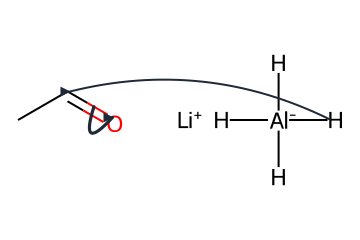
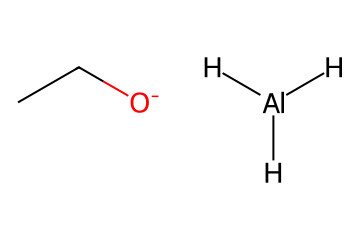
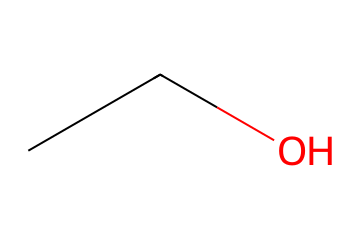
Mechanistic checklist
- Hydride transfer is polar, not radical; draw AlH4- delivering H- to C=O (no carbocation).
- Keep the intermediate as an Al-O bond; show the alcohol only after H3O+ workup.
- One hydride per carbonyl. Excess LiAlH4 is typically employed to guarantee complete reduction.
- alpha,beta-Unsaturated substrates give allylic alcohols (1,2-addition). Note this in captions/explanations.
- New stereocenters appear racemic with achiral LiAlH4.
Worked Examples
Benzaldehyde -> Benzyl alcohol
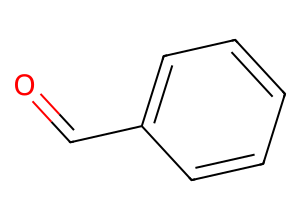

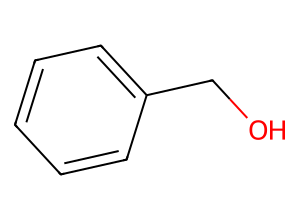
Aldehydes reduce rapidly—benzyl alcohol forms cleanly after a standard aqueous workup.
Cyclohexanone -> Cyclohexanol
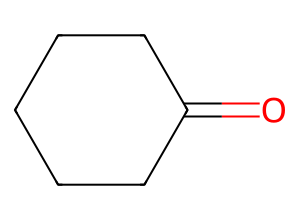
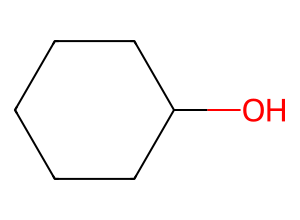
Ketones give secondary alcohols; no new stereocenter here, but asymmetric ketones produce racemic mixtures with achiral LiAlH4.
Cinnamaldehyde -> Cinnamyl alcohol (1,2-reduction)
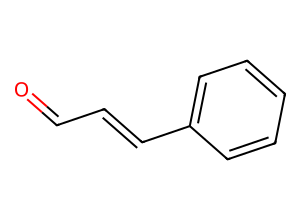
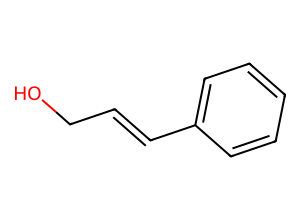
Enals/enones undergo 1,2-reduction to allylic alcohols under LiAlH4 conditions—note this common exam target.
Pinacolone (tert-butyl methyl ketone) -> tert-butyl ethanol analogue
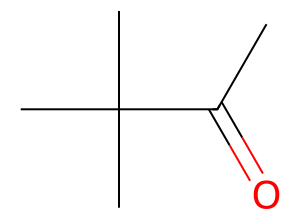
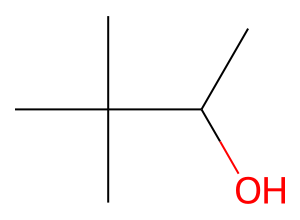
The new stereocenter forms racemically with achiral LAH; mention Felkin-Anh vs chelation control if chiral auxiliaries or Lewis acids are present.
Scope & Limitations
- Ideal substrates: Aldehydes (aliphatic, benzylic) and ketones (acyclic, cyclic, conjugated) give high conversions.
- Over-reduction risk: Esters, carboxylic acids, acid chlorides, amides, nitriles are also reduced by LiAlH4—avoid these functional groups if the goal is a selective aldehyde/ketone reduction.
- Functional groups to watch: Benzylic halides or nitro groups can undergo side reduction; sulfur- and phosphorus-containing substrates may poison the reagent.
- Solvent: Absolutely anhydrous Et2O/THF; protic solvents destroy LiAlH4 and can ignite.
- Comparison to NaBH₄: NaBH₄ is milder, compatible with protic solvents, and often selective for aldehydes/ketones only.
Edge Cases & Exam Traps
- Do not draw the alcohol before workup—the intermediate is an aluminum alkoxide.
- Conjugate (1,4) additions are minor; highlight 1,2-reduction for enones/enals.
- Over-reduction of esters/acids/amides is expected under LiAlH4 (unlike NaBH₄).
- Workup order matters: add quench mediator (wet EtOAc), then water, then acid. Dumping water directly onto LiAlH4 is hazardous.
- Oxidation-sensitive products (allylic alcohols) may require cool workup to suppress elimination.
Practical Tips
- Dry glassware and inert atmosphere (N₂/Ar) prevent premature decomposition.
- Add LiAlH4 slowly at 0 °C, then allow to warm to rt for completion.
- For equilibrium-prone substrates, monitor by TLC/GC and quench only after consumption.
- To label the hydroxyl proton, quench with D₂O instead of H2O.
- Filter the Al(OH)3 slurry, then concentrate the organic layer; residual aluminum salts can be removed with filtration through celite.
Exam-Style Summary
LiAlH4 delivers H- to C=O, forming an aluminum alkoxide; H3O+ work furnishes the alcohol. Compare the milder NaBH4 route: Aldehyde/Ketone → Alcohol with NaBH4/MeOH. Aldehydes -> primary alcohols, ketones -> secondary alcohols, alpha,beta-unsaturated systems give 1,2-reduction. Keep the medium anhydrous until the final quench, and remember that LiAlH4 over-reduces many other carbonyl derivatives.
Interactive Toolbox
- Mechanism Solver — Animate hydride transfer, the aluminum alkoxide, and the H3O+ workup.
- Reaction Solver — Flag functional groups LiAlH4 will over-reduce and compare against NaBH₄.
- IUPAC Namer — Confirm the primary/secondary alcohol names produced in this reduction.