Directed Aldol with LDA (Crossed Aldol)
Directed aldol reactions use lithium diisopropylamide (LDA) at −78 °C to form the kinetic enolate, then add an aldehyde or ketone electrophile for a crossed aldol (C–C bond formation without messy self-aldol mixtures).
Quick Summary
- Order matters:
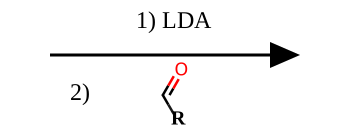
1) LDA 2) electrophile 3) H3O+ - Why it’s clean: enolate forms first, so self‑aldol side reactions are minimized
- Product: β-hydroxy carbonyl (usually no dehydration at −78 °C)
Why LDA Instead of NaOH?
Mechanism (4 Steps)
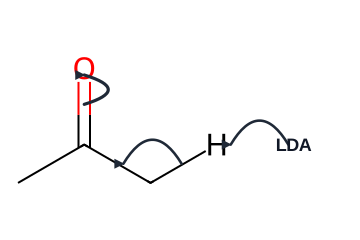
Step 1: Form the kinetic enolate
LDA (strong, bulky base) removes an α‑H at −78 °C → kinetic enolate (less substituted side).
Step 2: Add the electrophile
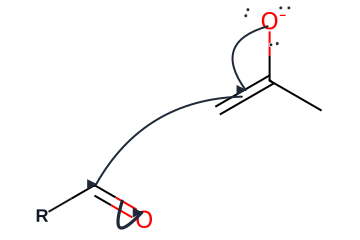
Add an aldehyde (common) or ketone after the enolate is formed.
Step 3: Make the C–C bond
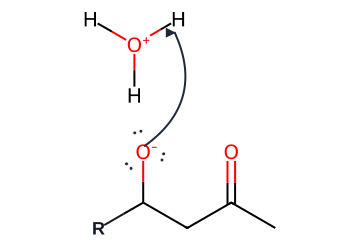
The enolate attacks the electrophile carbonyl → lithium alkoxide.
Step 4: Aqueous workup
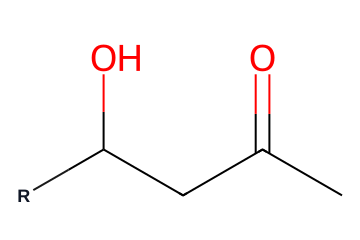
Protonate the alkoxide → β-hydroxy carbonyl.
Worked Examples
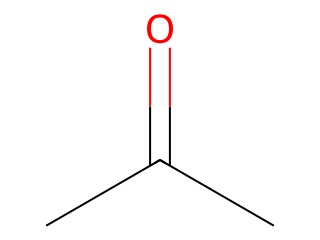
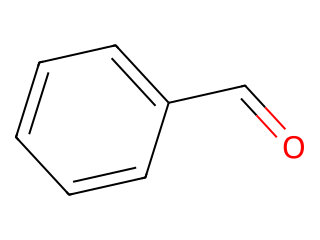
Example A: Acetone + Benzaldehyde
Ketone
Electrophile
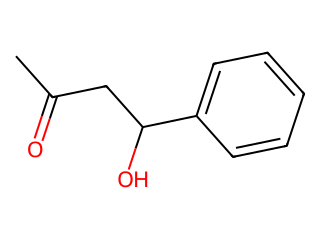
β-hydroxy ketone (4-hydroxy-4-phenylbutan-2-one)
Example B: Cyclohexanone + Acetaldehyde
Ketone
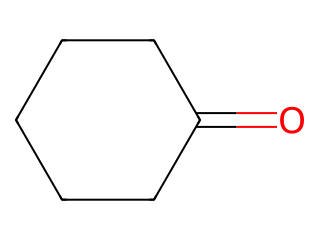
Electrophile
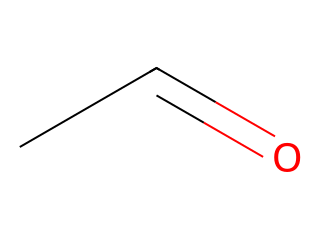
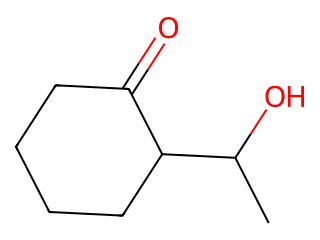
β-hydroxy ketone
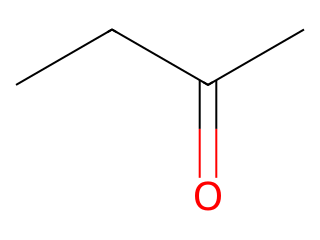
Example C: 2-Butanone (Kinetic Enolate)
Unsymmetric ketones → LDA gives kinetic enolate (less substituted α-carbon)
Ketone
Electrophile
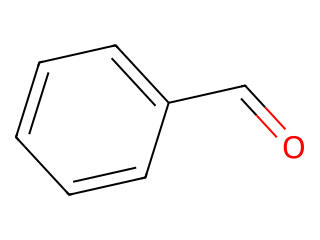
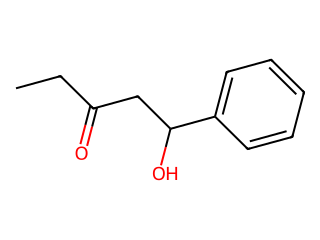
Deprotonation at CH₃ (less hindered) → kinetic enolate attacks benzaldehyde
Kinetic vs. Thermodynamic Enolate
Exam Quick Reference
| Clue in Problem | What to Do |
|---|---|
| "1) LDA, 2) aldehyde" | Directed aldol → β-hydroxy ketone |
| "−78 °C" | Kinetic enolate (less substituted) |
| Unsymmetric ketone + LDA | Draw kinetic enolate at CH₃ side |
| "Why LDA not NaOH?" | Prevents self-condensation; enolate first, electrophile second |
Key points:
- Product is β-hydroxy carbonyl (no dehydration)
- Kinetic enolate = less substituted α-carbon
- New stereocenters → often mixture of diastereomers
Interactive Toolbox
In problems, look for 1) LDA 2) aldehyde 3) H3O+ to recognize a directed (crossed) aldol.
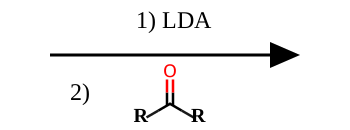
Ketones are less electrophilic than aldehydes, but the same enolate first → electrophile second logic applies.
- Mechanism Solver — replay directed aldol with LDA and see kinetic enolate control.
- Reaction Solver — predict crossed aldol products (and avoid self-aldol traps).
- IUPAC Namer — name the β-hydroxy carbonyl products.
Related Reading
- Aldol Condensation — Base-catalyzed with NaOH
- Claisen Condensation — Ester equivalent