Alkyl Halide Reactions: Generic SN1 Solvolysis
Polar protic solvents and silver-assisted ionization promote SN1 pathways on alkyl halides. This guide covers the common conditions (H₂O, H₂O/heat, MeOH, EtOH, AcOH, AgNO₃/EtOH) and their characteristic rearrangements, stereochemical outcomes, and elimination competition using worked substrate and solvent examples.
Quick Summary
- Reagents/conditions: Polar protic solvents (H₂O, ROH, AcOH) ± heat; AgNO₃ assists ionization by sequestering halide.
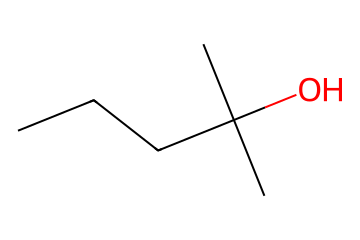
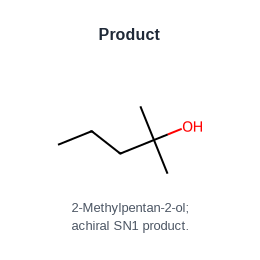
- Outcome: Carbocation formation followed by solvent capture → alcohol, ether, or ester; racemization can occur at a stereogenic reacting center.
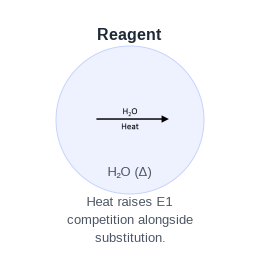
- Competition: β-Elimination (E1) increases with heat and with weaker nucleophiles; flag it whenever conditions are hot or solvents are acidic.
- Rearrangements: Hydride/alkyl shifts can occur if a more stable carbocation is accessible—check for them explicitly.
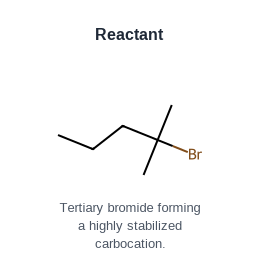
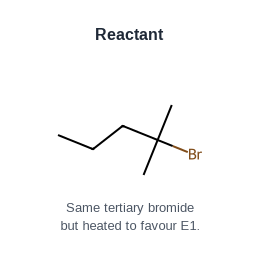
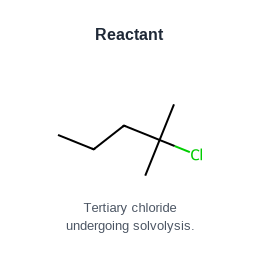
- Substrate scope: Tertiary and resonance-stabilized benzylic/allylic halides ionize readily in suitable media; secondary cases are more condition-dependent. Plain primary/neopentyl halides are poor substrates for an unrearranged SN1 pathway.
Mechanism (4 Steps + Optional E1)
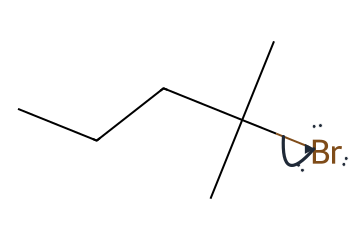
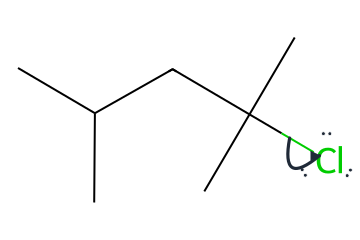
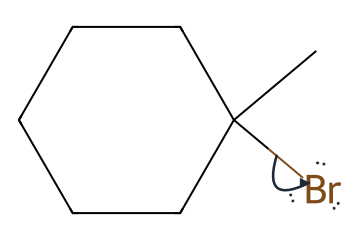
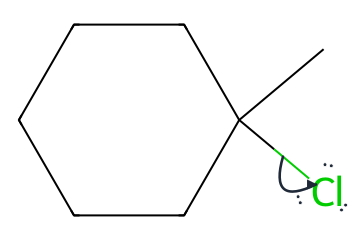
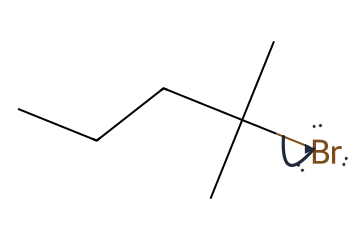
- Step 1 – Ionization (rate-determining) — C–LG heterolysis produces a carbocation and the leaving group (or AgX precipitate).
Illustration: /assets/reaction-library/alkyl-halide-sn1-h2o/alkyl-halide-sn1-h2o-step-01.svg - Step 2 – Rearrangement window — Optional 1,2-hydride/alkyl shifts appear when a more stable carbocation is accessible.
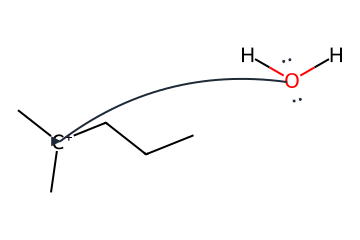
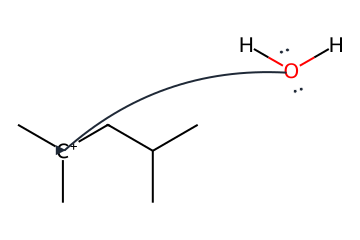
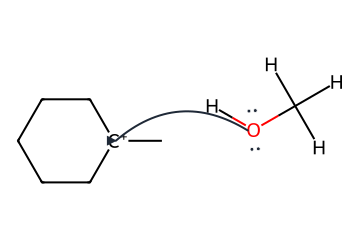
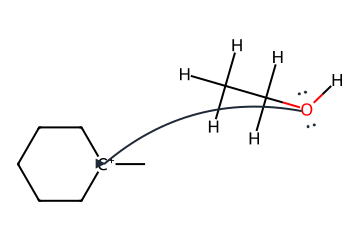
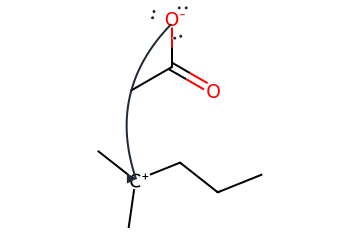
Note: No rearrangement is needed in the illustrated tertiary examples. - Step 3 – Solvent capture — H₂O/ROH attacks the planar carbocation to form an oxonium or acyloxonium intermediate.
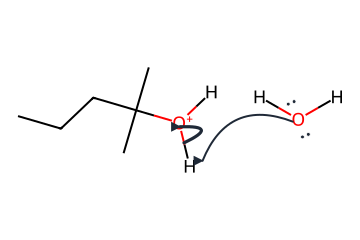
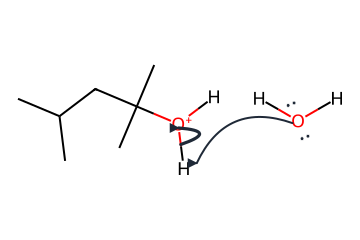
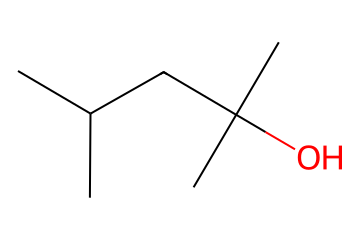
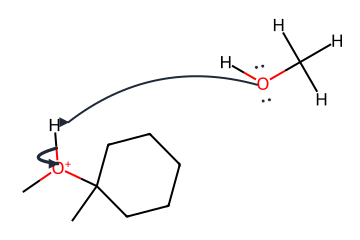
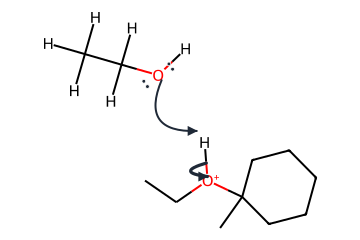
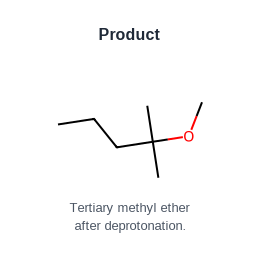
Illustration: /assets/reaction-library/alkyl-halide-sn1-h2o/alkyl-halide-sn1-h2o-step-02.svg - Step 4 – Deprotonation — Solvent or leaving group removes a proton to deliver the neutral product; the base becomes protonated.
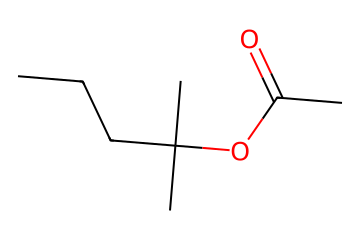
Illustration: /assets/reaction-library/alkyl-halide-sn1-h2o/alkyl-halide-sn1-h2o-step-03.svg - Optional E1 branch — β-H abstraction forms the alkene; competes under hot solvolysis conditions.
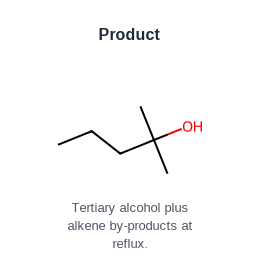
Product cue: β-H loss gives an alkene; the panels below focus on substitution.
Mention racemization (often partial) when capture creates a stereogenic center, because attack can occur from either face of the planar carbocation.
Reagent-specific steps
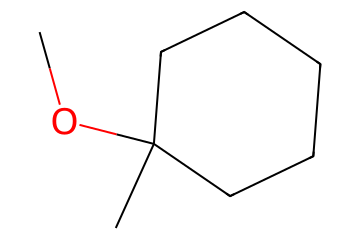
The figures below show ionization, capture, deprotonation, and products for representative substrates.
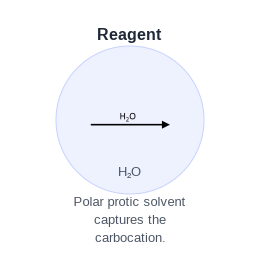
H₂O (cool to room temperature)
H₂O / heat (E1 competing)
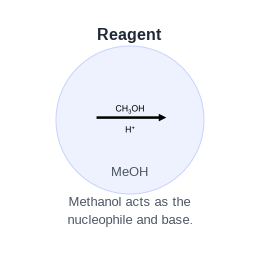
MeOH (alkoxonium capture)
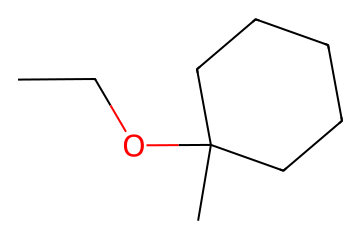
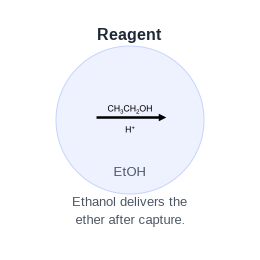
EtOH (silver-free)
AcOH (acetate capture illustrated)
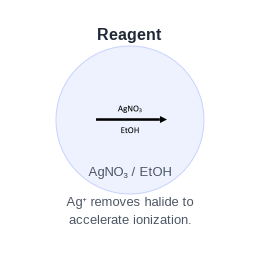
AgNO₃ / EtOH (silver-assisted)
Worked Examples
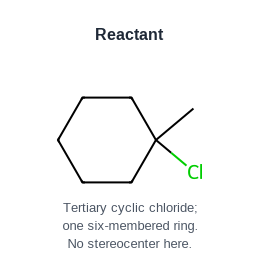
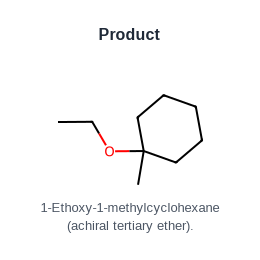
Practical Tips & Pitfalls
- SN1 vs E1: Raising temperature or using weak nucleophiles increases alkene formation.
- Check for rearrangements: highlight hydride or alkyl shifts whenever a more stable cation exists.
- Discuss ion-pair effects: partial inversion may occur if the leaving group shields one face.
- Laboratory context: The related Lucas test converts an alcohol to an insoluble alkyl chloride using concentrated HCl/ZnCl₂; it runs in the opposite direction from the hydrolysis examples here.
- IUPAC practice: have students name the alcohol/ether products via the IUPAC Namer to reinforce systematic naming.
Exam-Style Summary
SN1 solvolysis proceeds through carbocation formation, optional rearrangement, solvent capture, and deprotonation. Discuss racemization when the reacting center is stereogenic, mention elimination when heated, and specify when silver(I) is used to accelerate ionization.
Keep these pitfalls in mind:
- Rearrangements (1,2-hydride/alkyl shifts) whenever a more stable carbocation is accessible.
- Solvent capture vs elimination balance: higher heat and weaker nucleophiles tilt toward E1.
- Ion pairs can give incomplete racemization; leaving-group shielding can favor inversion.
- Lucas test turbidity concerns alcohol → alkyl chloride conversion with HCl/ZnCl₂, rather than alkyl-halide hydrolysis.
Interactive Toolbox
- Mechanism Solver — opens with tert-butyl chloride and water preloaded for mechanism practice; other solvents are available in the reagent list.
- Reaction Solver — open reaction practice and compare SN1 substitution with competing elimination in your written predictions.
- IUPAC Namer — practice naming the alcohol, ether, or ester produced after solvolysis.
Related Reading
- Generic SN2 Substitution — contrast inversion vs racemization and substitution vs elimination.
- E2 Zaitsev (NaOEt/NaOMe).
- E2 Hofmann (Bulky Bases).
- E1 Elimination via Hot Solvolysis.