Amide Hydrolysis (Acid or Base) to Carboxylic Acids and Amines
Amide hydrolysis is a core Orgo I/II transformation: amides are converted into carboxylic acids (or carboxylates) and amines (or ammonium salts). Compared with esters, amides hydrolyze slowly because amide resonance makes the carbonyl carbon less electrophilic and the nitrogen a poor leaving group. As a result, typical problems show strong acid or strong base plus heat.
Key Emphasis (Teaching Pivots)
- Amides hydrolyze slowly. Unlike esters, amide resonance delocalizes the nitrogen lone pair into the carbonyl, making the carbonyl carbon less electrophilic and the nitrogen a poor leaving group.
- Strong conditions required. Typical exam conditions are H3O+/heat (acid) or OH-/heat (base). Room temperature reactions are rare.
- Products differ by conditions. Acid hydrolysis gives carboxylic acid + ammonium; base hydrolysis gives carboxylate + amine.
- Base hydrolysis is irreversible. Formation of the stable carboxylate anion drives the reaction forward.
- Nitrogen leaves differently. In acid, nitrogen is protonated before leaving (ammonium); in base, nitrogen leaves as an anion (R-NH⁻) then picks up a proton from the carboxylic acid.
Quick Summary
Product type by amide class
- Primary amide (RCONH2) → carboxylic acid/carboxylate + NH4+/NH3
- Secondary amide (RCONHR') → carboxylic acid/carboxylate + R'NH3+/R'NH2
- Tertiary amide (RCONR'R'') → carboxylic acid/carboxylate + R'R''NH2+/R'R''NH
Mechanism - Acidic Amide Hydrolysis (6 Steps)
Conditions: H3O+, H2O, heat
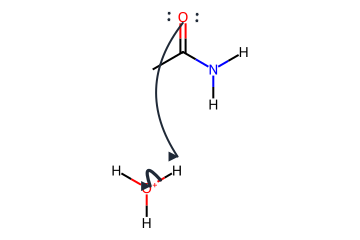
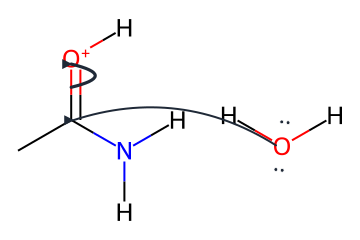
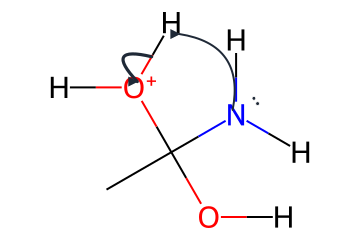
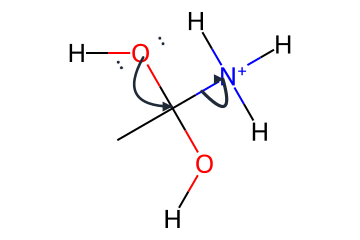
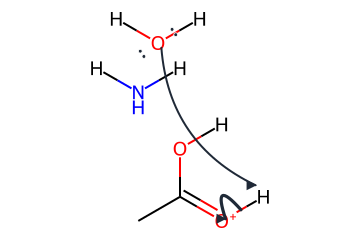
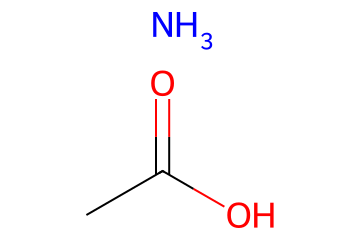
The mechanism involves protonating the carbonyl to activate it, then water adds to form a tetrahedral intermediate. Proton transfers make nitrogen a good leaving group, and the intermediate collapses to expel ammonium and form the carboxylic acid.
Mechanism - Basic Amide Hydrolysis (4 Steps)
Conditions: OH-, H2O, heat (acid workup optional)
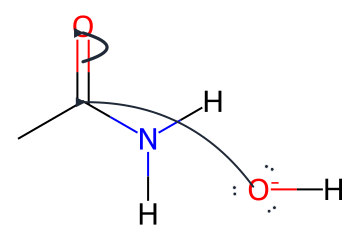
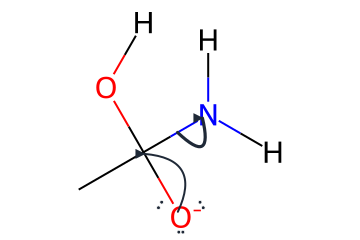
The mechanism involves hydroxide addition to the carbonyl forming a tetrahedral intermediate, then immediate collapse to expel the amine as an anion (R-NH⁻). This amine anion then deprotonates the carboxylic acid, forming the stable carboxylate and neutral amine.
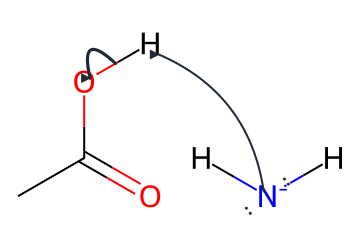
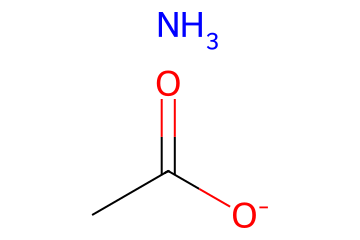
Worked Examples
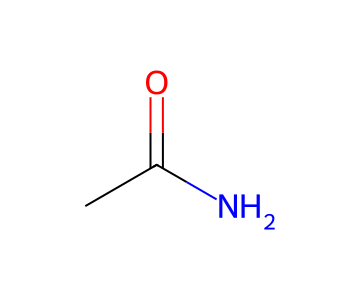
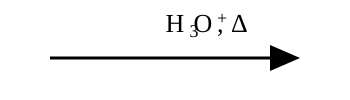
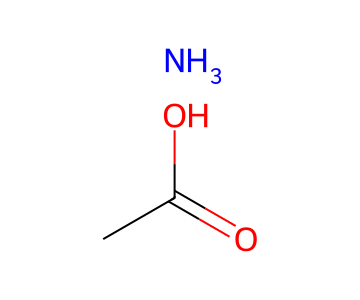
Products: CH₃COOH + NH₄⁺
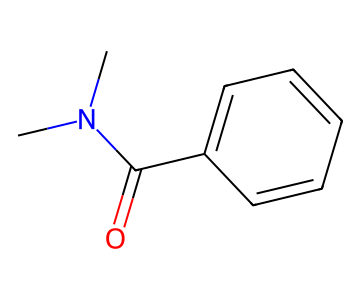
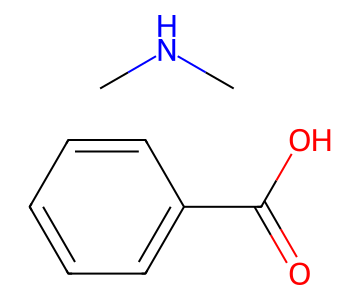
Products: PhCOOH + (CH₃)₂NH₂⁺
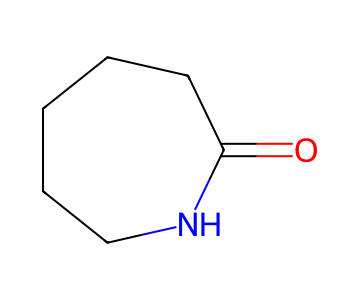
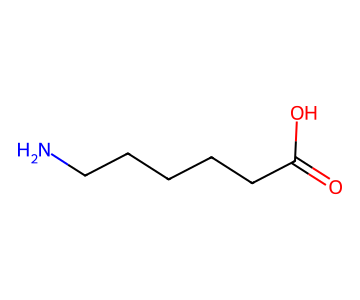
Ring opening creates a molecule with both an amine and a carboxylic acid (zwitterion behavior after neutralization).
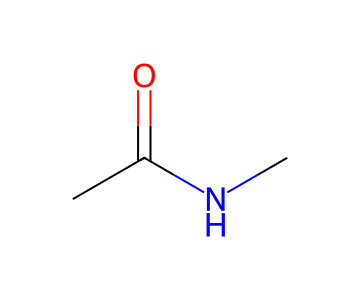
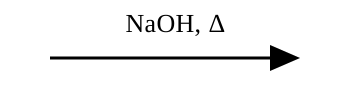
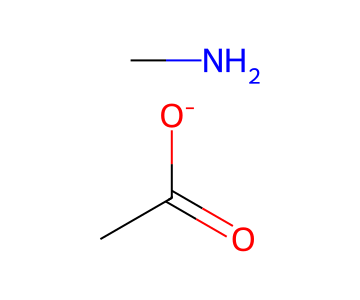
Products: CH₃COO⁻ + CH₃NH₂ (acid workup gives CH₃COOH)
Scope & Limitations
- Slow reaction: Amides require stronger conditions than esters. Refluxing in aqueous acid/base for hours is typical.
- Primary, secondary, tertiary amides: All react, but steric hindrance can slow tertiary amides.
- Lactams: Cyclic amides hydrolyze with ring opening. Products are bifunctional (amine + carboxylic acid on same molecule).
- Beta-lactams: 4-membered ring lactams (like penicillin core) are more reactive due to ring strain.
- Imides: Disubstituted nitrogen (two carbonyls on N) hydrolyzes more readily than simple amides.
- Peptide bonds: Peptide/protein hydrolysis is amide hydrolysis! Enzymes (proteases) or harsh conditions break these bonds.
- Functional group compatibility: Hot aqueous acid/base can also hydrolyze esters, cleave acetals (acid), and cause elimination/epimerization (base).
Edge Cases & Exam Traps
1) "Amides don't hydrolyze like esters"
If you apply ester logic (easy substitution at room temperature), you'll overpredict reactions. Exams often test that amides require harsher conditions (strong acid/base, heat).
2) Beta-lactams are unusually reactive
4-membered ring amides (beta-lactams) hydrolyze faster than typical amides due to ring strain. This is why penicillin is susceptible to beta-lactamase enzymes.
3) Peptide bonds are amides
Protein/peptide hydrolysis follows amide hydrolysis mechanisms. Proteases catalyze this; lab conditions use 6M HCl at reflux.
4) Functional group compatibility
Hot aqueous acid/base can also:
- Hydrolyze esters (and other acyl derivatives)
- Cleave acetals/ketals (acid)
- Cause elimination or epimerization in base-sensitive substrates
5) Ammonium vs amine in products
Under acid, amines appear as ammonium salts (protonated). Under base, amines are neutral.
6) Imides and "activated amides"
Imides (two carbonyls flanking nitrogen) hydrolyze more readily than simple amides due to increased electrophilicity.
7) Carboxylate vs carboxylic acid
Base hydrolysis gives carboxylate directly. You need acid workup to get the neutral carboxylic acid.
8) Formamides
Formamides (H-CO-NR₂) hydrolyze to give formic acid/formate + amine. The "R" on carbonyl is just H.
Product Prediction Checklist
- Identify the amide type: Primary / secondary / tertiary (determines amine product).
- Decide conditions:
- H3O+, heat → carboxylic acid + ammonium
- OH-, heat → carboxylate + amine (acid workup gives acid)
- Keep the carbon skeleton mapping straight:
- The acyl carbon becomes the carboxyl carbon.
- The N substituents become the amine substituents.
- Check for lactams: Ring opens to give bifunctional product.
- Scan for other acid/base sensitive groups if the substrate is complex.
Exam-Style Summary
- Acid hydrolysis (6 steps): Protonate carbonyl → water attacks → proton transfers to N → collapse expels ammonium → deprotonate. Products: carboxylic acid + ammonium.
- Base hydrolysis (4 steps): Hydroxide adds → collapse expels amine anion (R-NH⁻) → amine deprotonates carboxylic acid. Products: carboxylate + amine (acid workup gives carboxylic acid).
- Expect heat in typical exam conditions because amides are relatively unreactive.
- Nitrogen leaves as ammonium (acid) or amine (base).
- Lactams open to amino acid frameworks.
- Beta-lactams are more reactive (ring strain).
Interactive Toolbox
- Mechanism Solver - Enter any amide and see the full mechanism for acid or base hydrolysis.
- Reaction Solver - Provide an amide and predict the carboxylic acid/carboxylate and amine products.
- IUPAC Namer - Name the carboxylic acid and amine products.