Ketone α-Alkylation with Strong Base (Enolate SN2)
Ketone → α‑Alkylated Ketone with Strong Base
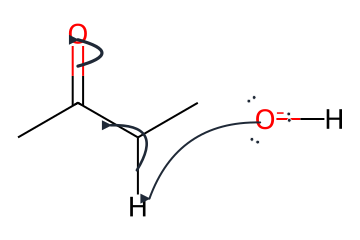
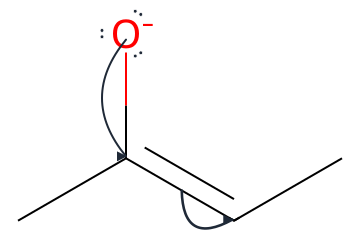
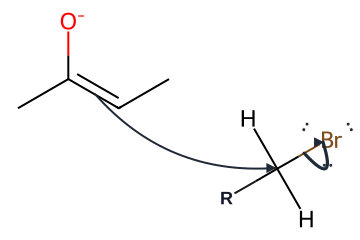
α‑Alkylation of ketones proceeds in two stages: (1) a strong, non-nucleophilic base removes an α‑hydrogen to generate the enolate; (2) the enolate carbon performs an SN2 substitution on a methyl or primary alkyl halide (or sulfonate). Base/temperature/solvent control which α‑site gets deprotonated (kinetic vs thermodynamic), and electrophile class dictates whether SN2 succeeds or E2 wins. The enolate is ambident (C vs O nucleophilicity), so conditions must favor C‑attack to obtain α‑alkylated carbonyls instead of enol ethers.
Introduction
- Goal: Install an alkyl group at the α‑position of a ketone via enolate C‑alkylation.
- Bases: LDA, LiHMDS, NaHMDS, KHMDS, NaH/NaOEt (dry ether solvents). Non-nucleophilic bases prevent competing addition.
- Electrophiles: Best = methyl, primary, allylic, or benzylic halides/sulfonates (I > Br ≫ Cl). Avoid secondary/tertiary (E2) and sp² (vinyl/aryl) partners.
- Control:
- Kinetic enolate (less substituted, faster to form): bulky base (LDA/LHMDS), THF, −78 °C, short times.
- Thermodynamic enolate (more substituted, more stable): weaker/reversible base (NaH/NaOEt), warmer, longer equilibration.
- C vs O alkylation: Lithium counterions + polar aprotic solvent + low temperature favor C‑attack; O‑alkylation gives enol ethers only when specifically desired.
- Over-alkylation: The mono-alkylated product is still enolizable. Limit base/electrophile or quench promptly to prevent repeat alkylation.
Quick Summary
- Stage 1 (enolate): Ketone + LDA/LHMDS (THF, −78 °C) or NaH/NaOEt (THF/EtOH, 0 → rt) → lithium/sodium enolate.
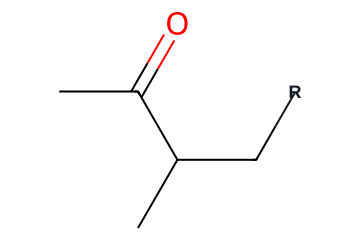
- Stage 2 (SN2): Enolate + R–X (I > Br ≫ Cl or OTs/OMs) → α‑alkylated ketone after workup.
- Kinetic vs thermodynamic α-site: Bulky base/cold/short time = kinetic; weaker base/warmer/equilibrating = thermodynamic.
- Electrophile scope: Methyl/primary/allylic/benzylic halides or sulfonates succeed. Secondary/tertiary lead to E2; vinyl/aryl do not undergo SN2.
- Select C over O alkylation: Polar aprotic solvent, lithium counterions, and low temperature suppress enol ether formation.
- Over-alkylation risk: Products remain acidic—use ≤1.1 equiv base/electrophile and quench promptly for mono-alkylation.
Mechanism — Enolate Formation then SN2 (Steps 1–4)
Mechanistic Checklist
- Confirm the substrate has at least one α‑hydrogen; no enolate = no alkylation.
- Document base, solvent, and temperature to justify kinetic vs thermodynamic α‑site selection.
- Specify electrophile class (methyl/primary/allylic/benzylic vs secondary/tertiary) and call out E2 failure routes when appropriate.
- Highlight C‑ vs O‑alkylation control: lithium enolates + polar aprotic solvents favor C-attack; O-alkylation gives enol ethers.
- Flag over-alkylation risk on activated methylenes (e.g., acetophenone, benzyl positions) unless equivalents are limited.
- Avoid protic solvents during the SN2 step; they quench the enolate or promote O-alkylation.
Worked Examples
Reactant
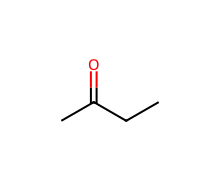
2‑Butanone (two different α-sites)
Reagents

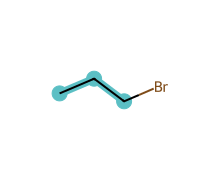
Magenta fragment = n-propyl group from 1-bromopropane
Product
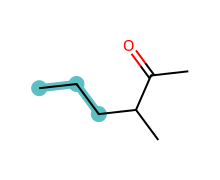
Propylated α‑carbon (seafoam-teal Color 1) at the more substituted site
Reactant
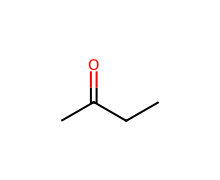
2‑Butanone (same substrate)
Reagents
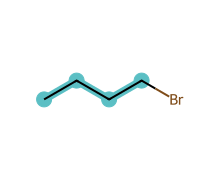
Magenta fragment = n-butyl group from 1-bromobutane
Product
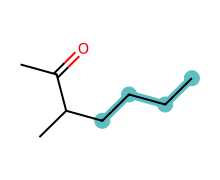
n‑Butyl chain (seafoam-teal Color 1) anchored to the thermodynamic α‑site
Reactant
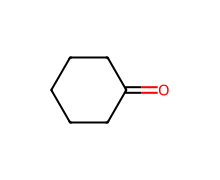
Cyclohexanone (cyclic, prochiral)
Reagents
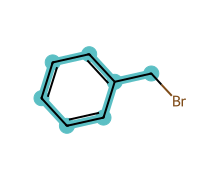
Magenta fragment = benzyl group from benzyl bromide (Br on the benzylic CH₂)
Product
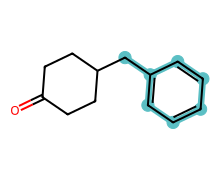
2‑Benzylcyclohexanone (seafoam-teal Color 1 = benzyl add-on)
Reactant
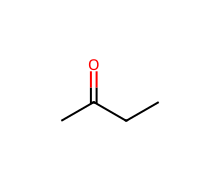
2‑Butanone
Reagents
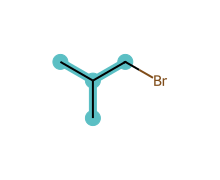
Magenta fragment = sec-butyl donor from 2-bromobutane (too hindered)
Product
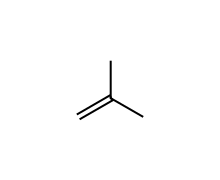
2‑Butene (no seafoam-teal Color 1 highlight: alkylation failed)
Scope & Limitations
- Works well: Simple ketones with α‑H; methyl or primary halides (I/Br ≫ Cl) or sulfonates; allylic/benzylic primary substrates; intramolecular versions that preorganize the SN2.
- Needs care: Hindered ketones (slow enolate formation), neopentyl electrophiles (SN2‑slow), coordinating heteroatoms that chelate Li⁺ (diminish C‑attack), or electrophiles prone to β‑elimination even if primary.
- Not applicable: Substrates lacking α‑H (benzophenone), vinyl/aryl halides (no SN2), or protic solvents that destroy the enolate.
- Side reactions: Self-aldol/Claisen when alkoxide bases meet carbonyl electrophiles, O‑alkylation if solvent is protic or electrophile is oxophilic (e.g., Me₃O⁺), and poly-alkylation when base/electrophile are in excess.
Edge Cases & Exam Traps
- Site choice logic: LDA/LHMDS, THF, −78 °C → kinetic α‑site. Alkoxide base, heat, or longer times → thermodynamic α‑site. Quote these cues when rationalizing regiochemistry.
- Electrophile misclassification: Secondary/tertiary/neopentyl electrophiles default to E2; do not draw α‑alkylation products.
- C vs O confusion: Unless the question explicitly requests an enol ether, show C‑alkylation.
- Over-alkylation: Installing benzyl/allyl groups increases acidity—expect dialkylation if reagents are in excess.
- Aldehyde nuance: Mechanistically similar yet more prone to self-condensation under alkoxide conditions; prefer strong, non-nucleophilic bases for aldehydes.
Practical Tips
- Dry glassware and inert atmosphere prevent quenching of strong bases; pre-generate the enolate at low temperature before adding electrophile slowly.
- Use 1.0–1.1 equiv base for mono-alkylation; quench immediately after the electrophile is consumed to avoid dialkylation.
- Prefer iodides/bromides or tosylates/mesylates; chlorides are sluggish, fluorides are inert.
- If O‑alkylation appears, lower temperature, switch to lithium bases, or employ additives (HMPA-like) only when permitted.
Exam-Style Summary
Strong base deprotonates the α‑carbon of a ketone to give an enolate (kinetic or thermodynamic). The enolate carbon then undergoes SN2 with methyl/primary/allylic/benzylic electrophiles to install a new C–C bond. Secondary/tertiary electrophiles produce E2 instead. Control the α‑site with base/temperature, favor C‑ over O‑attack via lithium counterions + aprotic solvent, and limit equivalents to avoid over-alkylation.
Related Reading
Interactive Toolbox
- Mechanism Solver — select the RBr + NaOH button to replay every RDKit step and toggle bases, temperatures, or electrophile classes.
- Reaction Solver — test new ketones or alkyl bromides to see whether SN2, repeat alkylation, or E2 is predicted before setting up glassware.
- IUPAC Namer — verify the nomenclature of the reactants/products from the worked examples without exposing SMILES in the article.
FAQ
Which bases control kinetic vs thermodynamic outcomes?
Bulky, non-nucleophilic lithium amides (LDA, LiHMDS) at −78 °C trap the kinetic α‑site before equilibration. Alkoxides (NaH, NaOEt) at 0 °C to reflux allow reversible deprotonation so the more substituted α‑site dominates.
What counts as a “good” electrophile here?
Primary alkyl bromides/iodides (including allylic and benzylic) undergo fast SN2. Secondary, tertiary, or neopentyl halides are too hindered and default to E2, so they’re best avoided or drawn as elimination products.
How do I keep C‑alkylation ahead of O‑alkylation?
Keep the enolate lithium- or sodium-bound in polar aprotic solvent, stay cold when adding the electrophile, and avoid strongly oxophilic alkylating agents unless you intentionally want the enol ether.
How can I prevent over-alkylation?
Use ≈1.0 equivalent of both base and electrophile, add the electrophile last and slowly, and quench as soon as TLC/IR shows consumption. Highly activated α‑methylene systems (allyl/benzyl) especially need tight stoichiometry.