Haloform Reaction: Carboxylic Acid Formation from Methyl Ketones (X₂/NaOH; then H₃O⁺)
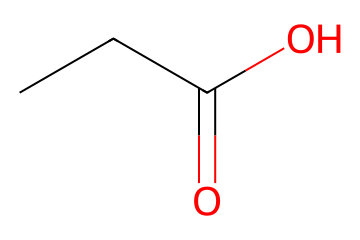
The haloform reaction converts methyl ketones (R–C(=O)–CH₃) into carboxylic acids using elemental halogen (Cl₂, Br₂, or I₂) under basic conditions (NaOH), followed by acidic workup (H₃O⁺). Base promotes enolization and successive α‑halogenation to the trihalomethyl ketone, hydroxide then performs nucleophilic acyl substitution to give the carboxylate plus the trihalomethyl anion, and proton transfers deliver haloform (CHX₃). Final acid workup protonates the carboxylate to the carboxylic acid. Each halogen follows the same mechanism—buttons simply choose X = Cl, Br, or I. The iodoform variant produces yellow CHI₃, the classic qualitative test for methyl ketones (and for ethanol via in situ oxidation to acetaldehyde).
Quick Summary
- Reagents/conditions: X₂, NaOH (aq or MeOH/H₂O), typically 0–25 °C; follow with H₃O⁺ workup. X ∈ {Cl, Br, I}.
- Outcome: R–COCH₃ → R–COOH + CHX₃ (chloroform, bromoform, or iodoform) after acidification.
- Mechanism: Base enolization → three α‑halogenations (CH₃ → CX₃) → hydroxide attack → C–C cleavage → haloform formation → acid workup.
- Scope: Requires a methyl ketone motif (–CO–CH₃) or acetaldehyde; secondary alcohols that oxidize to methyl ketones can respond under I₂/NaOH.
- Halogen choice: I₂ gives the most visible test (yellow CHI₃ precipitate); Br₂ is intermediate; Cl₂ often needs more forcing conditions.
- Stereochemistry: Not applicable—no new stereocenters or rearrangements.
Mechanism (Haloform; unified for Cl₂/Br₂/I₂)
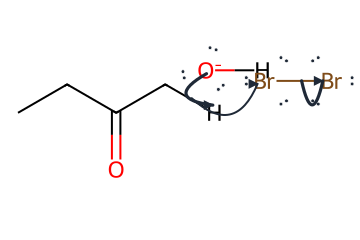

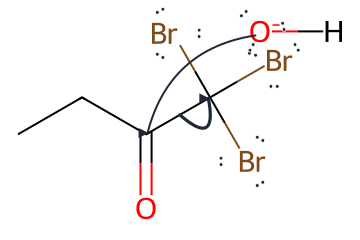
Mechanistic Checklist (Exam Focus)
- Verify the substrate contains the methyl ketone motif –CO–CH₃ (or acetaldehyde).
- Draw three α‑halogenation events under basic conditions (each via enolate/enol); cleavage only occurs after reaching CX₃.
- Show hydroxide attack on the carbonyl followed by collapse that expels CX₃⁻ (nucleophilic acyl substitution).
- Account for products: carboxylate + CX₃⁻ → CHX₃ (haloform) and, after H₃O⁺, R–COOH (the UI highlights the acid in the final frame).
- Highlight the iodoform test: I₂/NaOH generates yellow CHI₃; Br₂ and Cl₂ form bromoform/chloroform liquids.
- Remember secondary alcohol caveat: reagents that oxidize to methyl ketones (e.g., ethanol → acetaldehyde) also give positive iodoform tests.
Worked Examples
Butan-2-one → Propanoic acid + bromoform
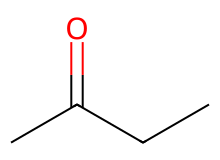
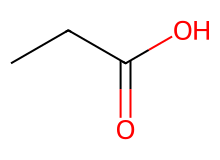
Br₂/NaOH, followed by H₃O⁺, removes the terminal methyl carbon of butan-2-one and furnishes propanoic acid.
Acetophenone → Benzoic acid + iodoform
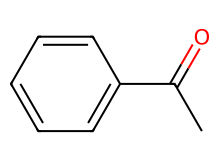
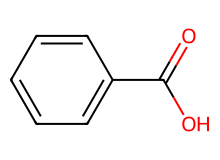
I₂/NaOH gives the classic iodoform test: benzoic acid forms and yellow CHI₃ precipitates.
3-Methyl-2-butanone → 3-methylbutanoic acid + haloform
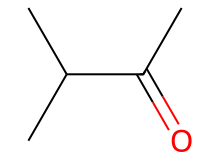
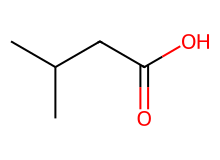
Even branched substrates succeed so long as a –CO–CH₃ group is present. Br₂/NaOH converts 3-methyl-2-butanone into 3-methylbutanoic acid while releasing haloform.
2,2,4,4-Tetramethylpentan-3-one — α-halogenation only
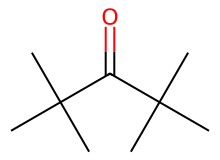
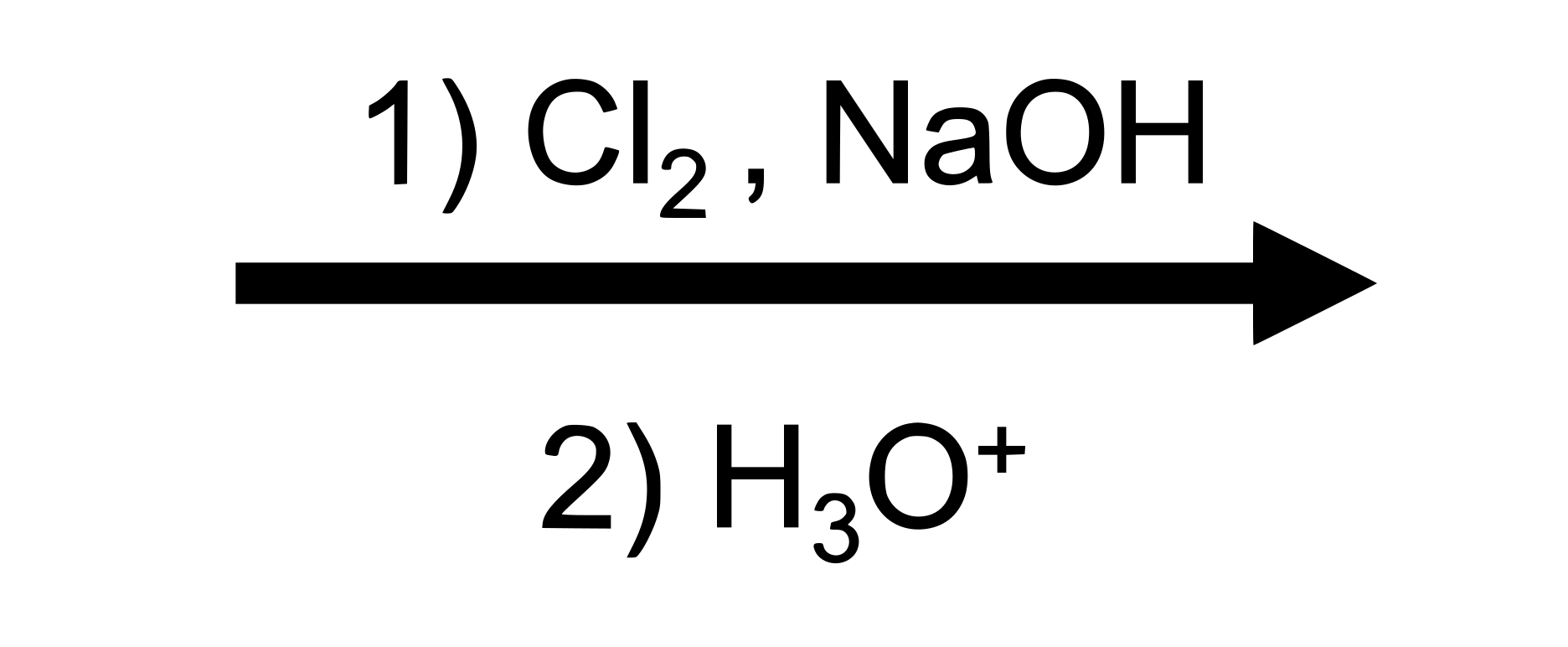

This heavily substituted ketone lacks a clean –CO–CH₃ unit, so Cl₂/NaOH only performs α-halogenation—no cleavage or haloform forms. Reaction Solver reports “no haloform” for this substrate.
Scope & Limitations
- Reactive motifs: Methyl ketones (aliphatic or benzylic) and acetaldehyde respond cleanly; chains contract by one carbon.
- Halogen trends: I₂ ≥ Br₂ > Cl₂ in ease; chloroform formation often requires warmer or longer conditions.
- Non-responders: Ketones lacking the –CO–CH₃ unit stop at α‑halogenated products—no haloform cleavage.
- Functional groups: Strong base can enolize other carbonyls or hydrolyze esters; plan protecting groups accordingly. Acid-sensitive groups see acid only during final workup.
- Secondary alcohol caveat: Alcohols oxidizable to methyl ketones (e.g., ethanol) can give positive iodoform results under the same hypohalite conditions.
Practical Tips & Pitfalls
- Use an excess of halogen and base to drive full trihalogenation; partial halogenation leaves α‑halo ketones that fail the test.
- Control temperature: keep cool during halogen addition (especially I₂) to moderate rate; warm the mixture if Cl₂ is sluggish.
- Observe the haloform: CHI₃ is a yellow solid, whereas CHBr₃/CHCl₃ form dense organic layers—separate before acidifying.
- Neutralize residual halogen/hypohalite before workup, then acidify to isolate the carboxylic acid.
Exam-Style Summary
X₂/NaOH converts methyl ketones to carboxylates via enolization, three α‑halogenations (CH₃ → CX₃), and hydroxide-induced C–C cleavage; CX₃⁻ is protonated to haloform (CHX₃). Acidic workup furnishes R–COOH. I₂ gives the classic iodoform (CHI₃) precipitate; Br₂/Cl₂ generate bromoform/chloroform liquids.
Related Reading
Interactive Toolbox
- Mechanism Solver — opens with acetone and I₂/NaOH so you can step through the iodoform reaction.
- Reaction Solver — Quickly find the product of any methyl ketone reacted with X₂/NaOH followed by H₃O⁺.
- IUPAC Namer — Learn the naming ins and outs of methyl ketone starting materials and the carboxylic acids they contract to.