Wolff-Kishner Reduction: Hydrazone Formation and Base/Heat Deoxygenation
Wolff-Kishner Reduction: Hydrazone Formation and Base/Heat Deoxygenation
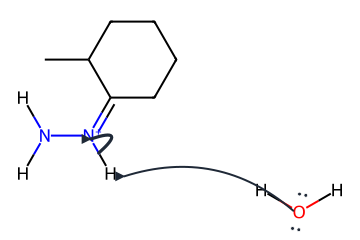
The Wolff-Kishner reduction converts aldehydes and ketones into the matching alkanes. Stage 1 is an acid-catalyzed condensation: hydrazine (NH2NH2) adds to the protonated carbonyl to give the hydrazone. Stage 2 heats that hydrazone with strong base (KOH or NaOH) so that sequential deprotonations collapse the C=N-NH2 unit, expelling nitrogen gas and replacing C=O with CH2. Compared with the Clemmensen reduction, Wolff-Kishner uses strongly basic, high-temperature conditions that protect acid-sensitive groups.
Quick Summary
- Overall reaction: Aldehyde or ketone + NH2NH2 (cat. acid) forms a hydrazone. Strong base and heat then replace C=O with CH2 while releasing N2.
- Stage 1 (implemented here): NH2NH2, catalytic AcOH or TsOH, protic solvent (EtOH, toluene with Dean-Stark, or THF/water) with water removal to drive condensation.
- Stage 2 (base/heat detail): KOH or NaOH, high-boiling solvent (diethylene glycol, triethylene glycol), 150-220 deg C. Huang-Minlon variant distills off water/hydrazine before the high-temperature step and reuses the same NH2NH2/NaOH button art (now provided as an SVG).
- Selectivity vs Clemmensen: Choose Wolff-Kishner when the substrate tolerates base and heat but cannot survive strong acid.
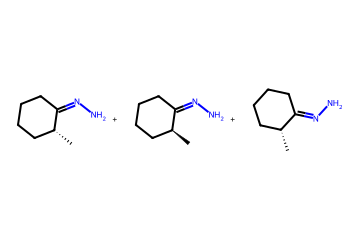
- Hydrazone stereochemistry: Hydrazones may appear as E or Z isomers; both are viable for Stage 2.
Mechanism (Stage 1) - Hydrazone Formation in Five Steps
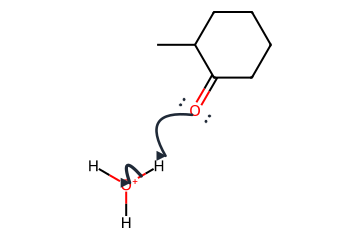
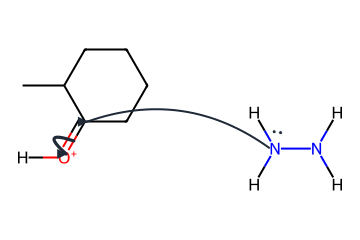
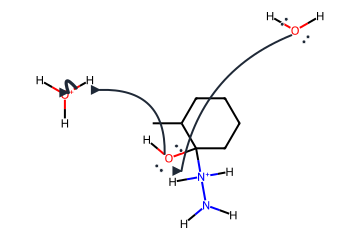
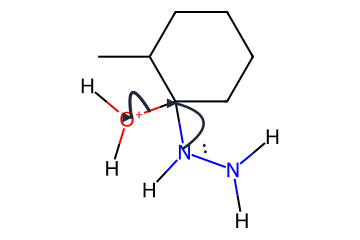
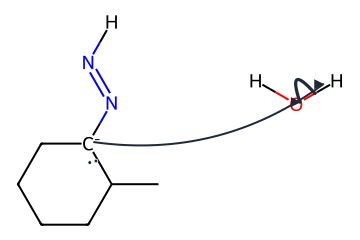
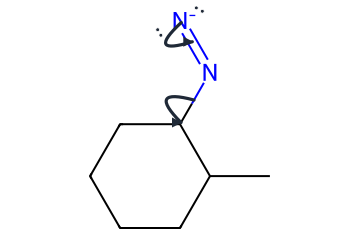
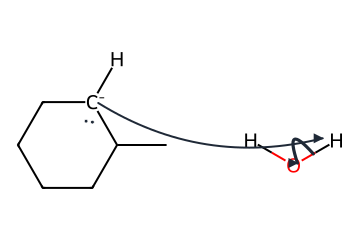
Mechanism (Stage 2) - Base/Heat Drives N2 Extrusion
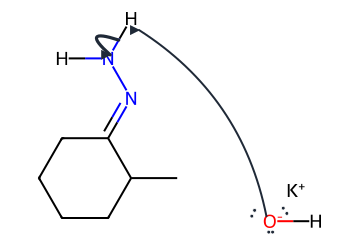
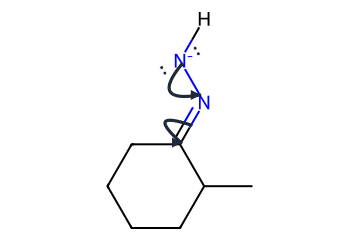
Stage 2 starts from the hydrazone. Strong base deprotonates nitrogen and then the carbon alpha to the C=N. Heating in a high-boiling solvent (diethylene glycol or triethylene glycol) allows those anions to collapse, expelling N2 and producing a carbanion at the former carbonyl carbon. Subsequent protonation delivers the alkane. The Huang-Minlon modification performs both stages in one pot by forming the hydrazone, distilling off water and excess hydrazine, then heating the residue with base to finish the reduction.


Worked Examples
Each card pairs the reactant rendering, the NH2NH2/NaOH reagent SVG (matching the legacy PNG button), and the expected product outcome.
Cyclohexanone → Cyclohexane
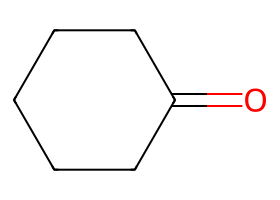
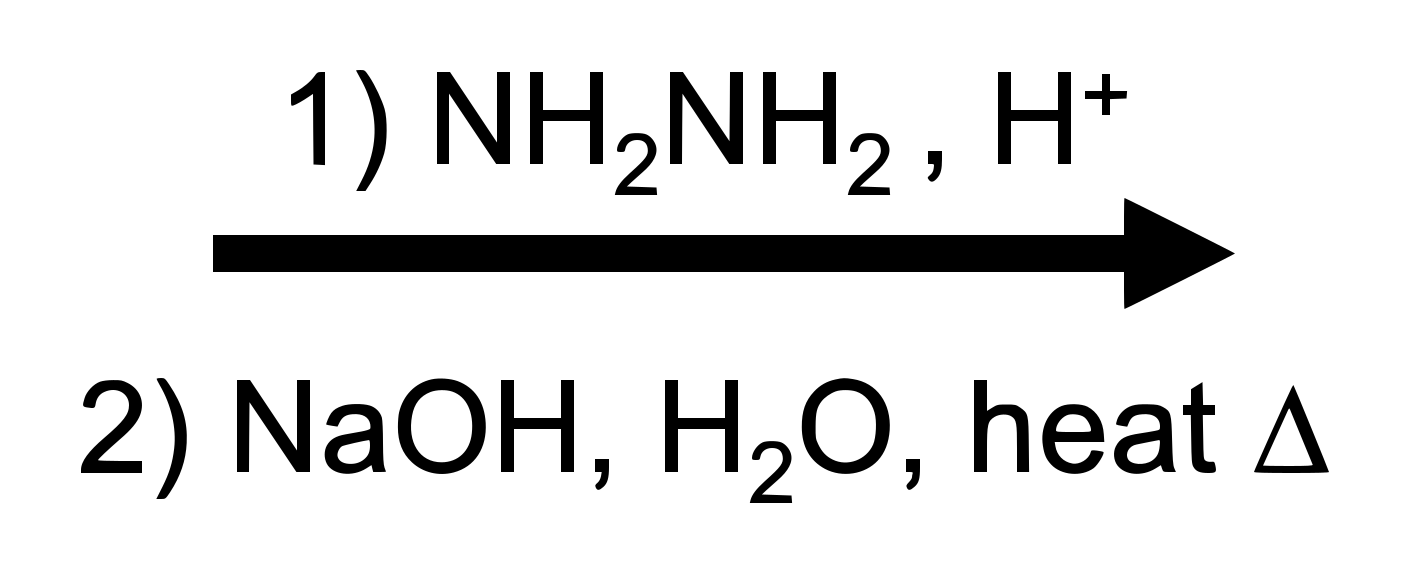

NH2NH2/AcOH followed by hot NaOH in diethylene glycol delivers cyclohexane while venting N2.
Acetophenone → Ethylbenzene
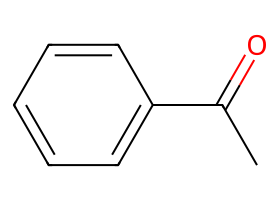
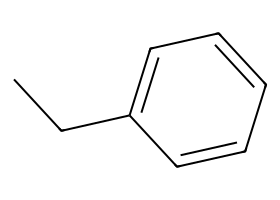
Dean-Stark water removal plus Huang-Minlon heating (excess hydrazine, NaOH, 190–200 °C) collapses the aromatic ketone to ethylbenzene.
Benzaldehyde → Toluene
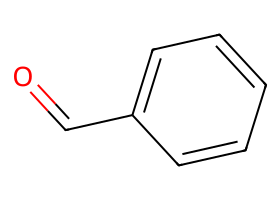
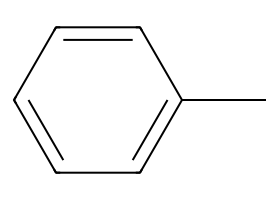
Aldehydes condense rapidly with hydrazine; the base/heat stage completes the reduction to toluene with minimal byproducts.
Scope & Limitations
- Reliable substrates: Aryl and aliphatic aldehydes, moderately hindered ketones, cyclic ketones.
- Tolerant groups: Acid-sensitive functions (acetals, some silyl ethers, tertiary alcohols) survive because the reduction occurs under strongly basic, non-oxidizing conditions.
- Caution zones: Base- or heat-labile groups (alkyl halides, sulfonates, some heteroaryl substituents) can eliminate or rearrange during Stage 2. Very hindered ketones condense slowly; plan longer reaction times and aggressive water removal.
- Not ideal: Substrates without alpha hydrogens require modified protocols; conjugated nitro groups or other oxidants may decompose under the hot, basic conditions.
Practical Tips
- Use mild acid (AcOH or catalytic TsOH) in Stage 1. Strong mineral acid protonates hydrazine too much and stalls addition.
- Remove water continuously (Dean-Stark, azeotropic distillation, or molecular sieves) to push the condensation toward hydrazone, especially for ketones.
- For Huang-Minlon conditions, distill off water and excess hydrazine before charging base and heating to minimize foaming.
- Hydrazine is toxic and corrosive; handle it in a hood with proper PPE. Expect vigorous N2 evolution in Stage 2, so vent apparatus safely.
- Compare against the Clemmensen reduction (Zn(Hg)/HCl). Pick Wolff-Kishner when the substrate tolerates base and heat better than strong acid.
Exam-Style Summary
Wolff-Kishner is a two-stage carbonyl deoxygenation. Form the hydrazone under NH2NH2 and mild acid, remove water to lock it in, then heat strongly with base so consecutive deprotonations expel N2 and reveal the alkane (C=O -> CH2). Remember why it complements Clemmensen: Wolff-Kishner protects acid-sensitive groups but requires base-tolerant substrates and high temperatures.
Related Reading
Interactive Toolbox
- Mechanism Solver - Explore the Stage 1 hydrazone formation steps (protonation, addition, proton shuttles, dehydration, hydrazone release).
- Reaction Solver - Compare Wolff-Kishner with Clemmensen, and flag substrates that are base- or heat-labile before you commit to the reduction.
- IUPAC Namer - Confirm hydrazone names before moving into the base/heat stage or reporting the final alkane.