Oxime Formation + Beckmann Rearrangement (NH₂OH/H⁺ then H₂SO₄)
Aldehydes and ketones react smoothly with hydroxylamine (NH₂OH) under mild acid to give oximes. When that oxime is activated with sulfuric acid, the anti substituent migrates to nitrogen while the N–O bond breaks, delivering the Beckmann rearrangement. Aldoximes become nitriles; ketoximes furnish amides or lactams. This guide packages both stages together so you can prep clean oximes in Stage 1 and immediately evaluate their Beckmann behavior in Stage 2.
Quick Summary
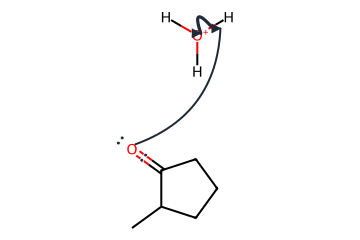
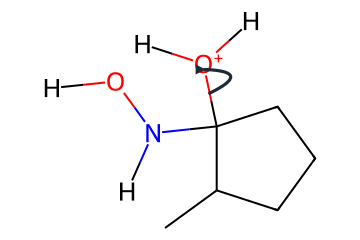
- Stage 1 (NH₂OH/H⁺): Mild acid (AcOH or catalytic TsOH) protonates the carbonyl, hydroxylamine attacks, proton shuttles activate OH for departure, and dehydration delivers the oxime. Removing water (Dean–Stark, sieves) drives the equilibrium.
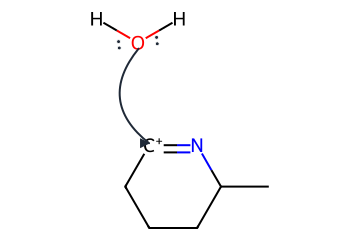
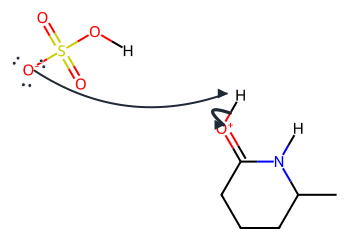
- Stage 2 (H₂SO₄): Protonate the oxime oxygen, anti substituent migrates to nitrogen as N–O breaks, water captures the nitrilium, HSO₄⁻ deprotonates to imidate, H₂SO₄ reprotonates nitrogen, and a final sulfate-assisted deprotonation restores the carbonyl.
- Products: Aldoxime → nitrile. Ketoxime → amide. Cyclic ketoxime → ring-expanded lactam.
- Migratory aptitude: aryl ≳ tertiary > secondary > primary > methyl > hydrogen. Only the group anti to the leaving OH migrates.
- Conditions overview: Stage 1 uses mild acid in EtOH, MeOH, or toluene (with water removal). Stage 2 uses conc. H₂SO₄ at 0–25 °C to activate the oxime, followed by controlled warming to complete rearrangement.
Mechanism (Stage 1) – Hydroxylamine Condensation to Oximes




Mechanism (Stage 2) – Beckmann Rearrangement under H₂SO₄




Worked Examples
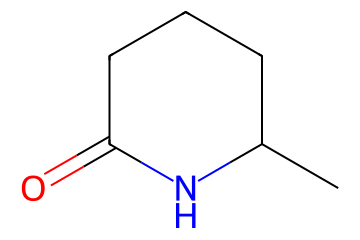
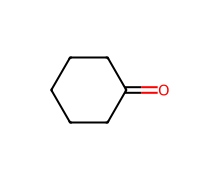
Cyclohexanone → ε-Caprolactam
Stage 1 – Oxime formation (NH₂OH)
 +
+
 →
→
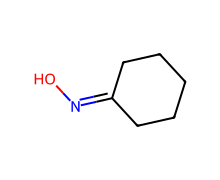
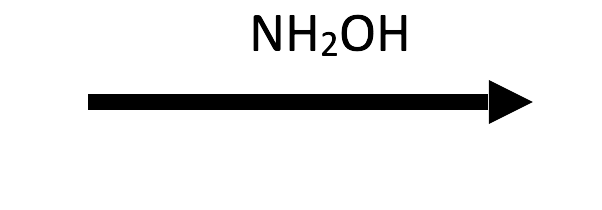
Dean–Stark removal of water in toluene or xylene pushes cyclohexanone to its oxime cleanly.
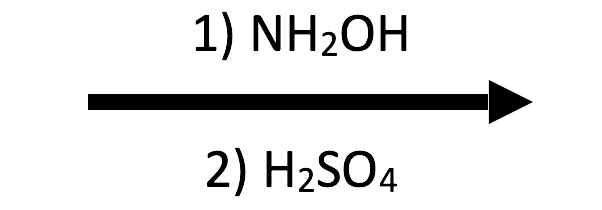
Stage 2 – Beckmann rearrangement (NH₂OH + H₂SO₄)
+
 →
→

Controlled addition of conc. H₂SO₄ at 0 °C then a gentle warm-up delivers ε-caprolactam (nylon‑6 monomer).
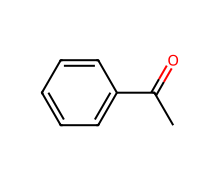
Acetophenone → Acetanilide
Stage 1 – Oxime formation (NH₂OH)
 +
→
+
→
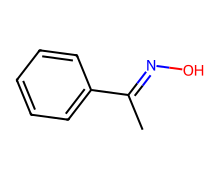
Use ethanol or methanol with a catalytic acid to form the acetophenone oxime; keep the mixture water-lean.
Stage 2 – Beckmann rearrangement (NH₂OH + H₂SO₄)
+
→
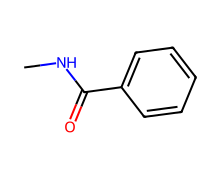
Slowly protonate the oxime at 0 °C, then warm to 50–60 °C to favour phenyl migration and deliver acetanilide after neutralisation.
Scope & Limitations
- Aldehydes vs ketones: Aldehydes condense fastest and ultimately yield nitriles. Ketones need better water removal but give amides. Cyclic ketones expand by one atom to lactams.
- Migrating group control: Only the substituent anti to –OH migrates. Equilibrate (acid or base) to set the E/Z geometry if necessary. Migratory aptitude: aryl ≳ tertiary > secondary > primary > methyl > hydrogen.
- Sensitive functional groups: Stage 1 is mild; Stage 2 uses strong acid, so protect acid-labile substituents. Strongly basic or oxidising groups (peroxides, nitros) may fail.
- Competitive pathways: Hydroxylamine can over-condense or rearrange if the carbonyl is highly activated. In Stage 2, excessive heat causes secondary sulfonation or dehydration of neighboring alcohols.
Practical Tips
- Generate hydroxylamine in situ (NH₂OH·HCl + NaOAc) or buy anhydrous NH₂OH for cleaner Stage 1 outcomes. Maintain pH ≈ 4–5: too acidic suppresses nucleophilicity, too basic slows condensation.
- Remove water continuously for ketones. Dean–Stark (toluene), molecular sieves (MeOH), or azeotropic distillation all work.
- For Stage 2, chill the oxime/H₂SO₄ mixture to 0 °C during protonation. Then warm gradually (≤60 °C) to control migration and water addition before any higher-temperature workup.
- Quench carefully: Beckmann rearrangements often release heat. Dilute with ice and neutralise slowly with aqueous base (NaOAc, NaHCO₃) to prevent amide hydrolysis.
- For lactam syntheses (e.g., ε-caprolactam), isolate the oxime hydrochloride, wash, then perform the rearrangement in oleum or conc. H₂SO₄ with a staged temperature ramp.
Exam-Style Summary
- Stage 1: Protonate the carbonyl → NH₂OH attack → proton shuttles → water leaves → neutral oxime (remember E/Z geometry).
- Stage 2: Protonate oxime O → anti group migrates (N–O breaks) → water captures nitrilium → HSO₄⁻ deprotonates to imidate → acid reprotonates nitrogen → HSO₄⁻ removes the carbonyl proton → amide/lactam (or nitrile for aldoximes).
- Migratory aptitude controls regiochemistry and only the anti group migrates. Cyclic ketoximes expand by one carbon.
- Products: Aldoxime → nitrile. Ketoxime → amide. Cyclic ketoxime → lactam. Plan protecting groups for strongly acid-labile substituents.
Related Reading
Interactive Toolbox
- Mechanism Solver – step through the NH₂OH oxime build and the H₂SO₄ Beckmann rearrangement presets.
- Reaction Solver – compare oxime/Beckmann vs. hydrazone/Wolff-Kishner vs. semicarbazone routes.
- IUPAC Namer – confirm oxime, nitrile, and amide nomenclature before final answers.