Alcohol to Alkyl Chloride (SOCl2)
Exam Answer
- Reagents
- SOCl2 (often with base like pyridine)
- Major outcome
- ROH to RCl
- Selectivity
- Chlorosulfite intermediate; SNi retention vs SN2 inversion depends on conditions
Common traps
- Primary/secondary can show retention (SNi) or inversion (SN2) depending on conditions
- SN1/E1 only when carbocation formation is plausible (typically 3 degree / strongly ionizing)
- Rearrangements only expected when a carbocation forms
What to expect by substrate class
Jump to full playbook| Substrate | Likely pathway | Notes |
|---|---|---|
| 1 degree ROH | activation then substitution | often no rearrangement |
| 2 degree ROH | SNi vs SN2 depends on conditions | watch stereochemistry |
| 3 degree ROH | SN1/E1 possible | rearrangements possible if carbocation forms |
Thionyl chloride (SOCl₂) turns primary and secondary alcohols into alkyl chlorides by first forming a chlorosulfite intermediate (RO–SOCl) that subsequently collapses with loss of SO₂. HCl forms during activation and is trapped as pyridinium chloride when pyridine is present. The stereochemical story splits after activation:
- SOCl₂ alone (no added base): many secondary alcohols proceed through an SNi (substitution nucleophilic internal) pathway via a tight ion pair, giving overall retention at the stereocenter.
- SOCl₂ with pyridine (or another tertiary amine): the reaction follows classic SN2 with inversion—pyridine speeds deprotonation and traps HCl so chloride behaves as an external nucleophile.
Primary alcohols commonly undergo SN2 substitution, but an ordinary CH₂OH carbon has no stereocenter at which to observe inversion; tertiary alcohols are generally unsuitable and are better handled with HX. Allylic substrates can display SN2′ competition, and benzylic alcohols react rapidly under both regimes.
Compare with the bromide analogue in the PBr₃ guide, or the sulfonate route in the TsCl tosylation playbook when you need a switchable leaving group strategy.
Quick Summary
- Reagents & conditions: SOCl₂ (neat or dry solvent, typically 0–25 °C) can give SNi retention; SOCl₂ with pyridine (or Et₃N) biases SN2 inversion while scavenging HCl.
- Scope: primary & secondary alcohols convert to alkyl chlorides; tertiary centers are unreliable (elimination/SN1 competition).
- Driving force: chlorosulfite collapse releases SO₂. HCl forms during activation; added pyridine captures it as pyridinium chloride.
- Stereochemistry: SOCl₂ alone → retention frequently observed at secondary stereocenters; SOCl₂/pyridine → inversion. Ordinary primary CH₂OH sites have no observable R/S inversion.
- Rearrangements: rare—tight ion pairs and concerted SN2 avoid free carbocations.
Mechanism — SOCl₂ (± Pyridine)
Shared Step — Chlorosulfite formation (activation)

Path 1 — SOCl₂ (no base): SNi internal return → retention


Path 2 — SOCl₂ + pyridine: SN2 → inversion


Mechanistic Checklist
- Chlorosulfite formation is common to both conditions.
- SOCl₂ alone (no base) often follows SNi internal return → retention at secondary stereocenters.
- SOCl₂ + pyridine favors SN2 → inversion; pyridine captures HCl and keeps chloride “external.”
- Ordinary primary CH₂OH carbons are not stereocenters; do not assign R/S inversion to them.
- Rearrangements are rare—tight ion pairs avoid free carbocations.
- Tertiary alcohols are poor candidates (sterically blocked, elimination prone).
- Allylic substrates can show SN2′ competition (regioisomer mixtures); benzylic substrates react rapidly.
Worked Examples
Secondary, chiral centre — retention vs inversion
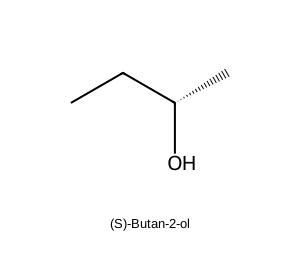

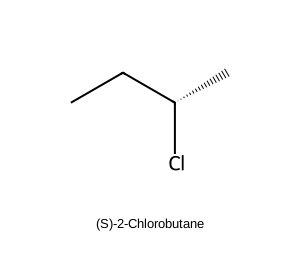
SNi internal return delivers predominant retention: (S)-2-butanol → (S)-2-chlorobutane.

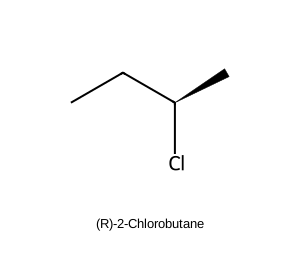
Pyridine favors SN2 inversion: (S)-2-butanol → (R)-2-chlorobutane in the standard SN2 prediction.
Primary alcohol — substitution without a stereocenter
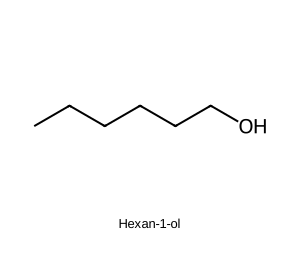
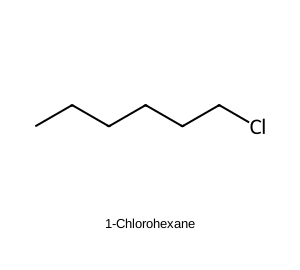
1-Hexanol gives 1-chlorohexane. Its terminal CH₂ carbon is not stereogenic, so this example cannot distinguish retention from inversion.
Allylic example — SN2 plus SN2′
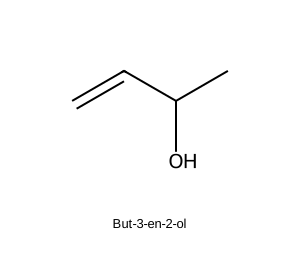
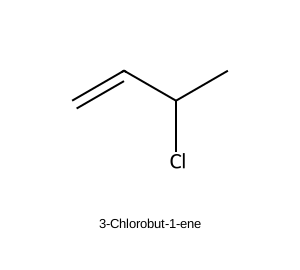
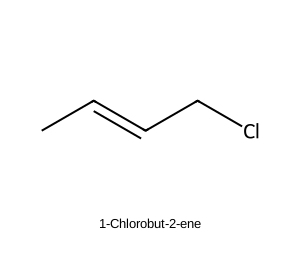
Allylic systems may furnish mixtures: direct substitution gives 3-chlorobut-1-ene; SN2′ shifts the double bond and gives 1-chlorobut-2-ene (E/Z not assigned).
Tertiary alcohol — not suitable
 No reliable SN2 prediction
Tertiary centers are too hindered for SN2 and tend toward elimination/SN1 — use HX instead.
Edge Cases & Exam Traps
- “Same reagents, different stereochemistry?” Yes: SOCl₂ alone often retains (SNi), whereas SOCl₂/pyridine inverts (SN2). Expect this in stereochemical comparison questions.
- Partial racemisation can creep in if the medium becomes ionizing or warms up (chlorosulfite ionizes further).
- Elimination (E2) rises when strong bases other than pyridine are present or the reaction is overheated.
- Neopentyl primary alcohols react sluggishly — consider alternative halogenation strategies.
- Acid-sensitive groups may suffer from generated HCl; pyridine helps neutralize it.
PCl3 and PCl5 as chlorinating reagents
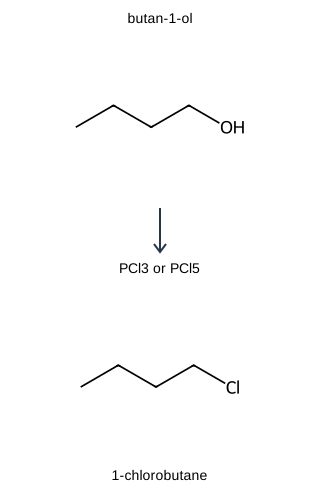
Phosphorus trichloride (PCl3) and phosphorus pentachloride (PCl5) also convert suitable alcohols to alkyl chlorides. Butan-1-ol gives 1-chlorobutane with either reagent.
Their net equations differ: 3 ROH + PCl3 → 3 RCl + H3PO3, whereas ROH + PCl5 → RCl + POCl3 + HCl. These are net substitutions, not the SOCl2 mechanism drawn above. Do not transfer a stereochemical rule from one chlorination protocol to every other reagent and substrate.
Practical Tips
- Keep the setup dry—moisture quenches SOCl₂ and slows chlorosulfite formation.
- Typical charges: 1.1–1.5 equiv SOCl₂; 2–3 equiv pyridine (if used) in CH₂Cl₂ or Et₂O at 0–25 °C.
- Gas evolution (SO₂, HCl) requires good ventilation and a gas trap; add alcohol to SOCl₂ cautiously.
- For sensitive substrates, run cold and include pyridine to limit elimination or side reactions.
- Quench into ice-cold aqueous NaHCO₃, vent carefully, and wash thoroughly to remove pyridinium salts and residual SO₂.
Exam-Style Summary
SOCl₂ converts primary/secondary alcohols to alkyl chlorides by forming a chlorosulfite intermediate. Without base, a tight ion pair delivers SNi retention at many secondary stereocenters. Add pyridine (or another tertiary amine) and the pathway becomes SN2 with inversion. Ordinary primary CH₂OH centers have no observable R/S inversion; tertiary centers are unsuitable.
Interactive Toolbox
- Mechanism Solver — Open the tool to check its available reaction templates.
- Reaction Solver — Open the Classic tool to draw a substrate and choose from supported reagents; this link does not preload a solved example.
- IUPAC Namer — Check product names from structures you enter.
Ready to practise? Launch the Reaction Solver and compare SOCl₂ pathways with alternative halogenations such as PBr₃ or TsCl.